Ayurveda comprising of Ayur (life) and Veda (Scince or knowledge) is a holistic healing science which is in other words called “Science of life”.
Ayurveda deals with the complete way of life, rather than just the treatment of diseases.Basic principlesAyurveda considers the humanity and universe as a common origin, and considers nature to […]
Showing posts with label chemotherapy. Show all posts
Showing posts with label chemotherapy. Show all posts
Friday, April 11, 2008


Monday, September 17, 2007
Genetics Hold Promise, Challenges for Cancer Care
(HealthDay News) -- Someday in the future, people may routinely have doctors scan their personal genomes, looking for this or that aberrant gene to help prevent, spot or treat a cancer.
"We are in the midst of both an evolution and a revolution in cancer care," said Dr. Len Lichtenfeld, deputy chief medical officer at the American Cancer Society.
While gene-specific treatments such as the leukemia "wonder drug" Gleevec are already on the scene, "we still have an incredibly long way to go in terms of how we understand the basic genetics of cancer," he said.
"Right now, we are working still at a very crude level -- the future will be much more dynamic," Lichtenfeld said.
The "genetics generation" has much to be proud of, however. The mapping of the human genome in the late 1990s, the advent of high-output methods to comb through thousands of genes, and a deepening knowledge of the complexities of DNA and RNA are bringing new discoveries each week.
Some of the highlights from just the past year:
Last August, a U.S. team announced the first-ever gene test aimed at pinpointing which patients with early stage lung cancer will benefit from post-operative chemotherapy, and which can be spared the arduous treatment.
That same month, Canadian researchers reported on a new model to speed the identification of mutations linked to a silent killer, ovarian cancer. Spotting those genes could pinpoint women at risk.
A $100 million U.S. project called the Cancer Genome Atlas announced its first major achievement in September -- the mapping of genomes for breast and colon cancer. Scientists say they were able to identify 100 mutations thought responsible for each of those malignancies.
In March, British scientists reported that they had pinpointed 100 mutated genes that help drive more than 210 different cancer types. "This set of genes is known to regulate key functions in virtually all cell processes of growth, differentiation," researcher Andrew Futreal, of the Wellcome Trust Sanger Institute in Cambridge, said at the time.
And, in April, a team at Duke University said it had found genes that encourage breast cancer's spread to the lungs, as well as mutations that hamper chemotherapy's therapeutic effects.
It all looks very promising. But Lichtenfeld said that every DNA discovery has its downside, too.
"The more that we learn, the more complex it is going to get," he said. Indeed, the mapping of the breast and colon cancer genomes revealed that not only were the two cancers radically different in their origins, but that each tumor differed greatly between patients.
It's quickly become a very tangled web, experts say, but that's an inevitable part of the science.
"There may be a period of greatly evolving complexity that we have to get through which will only be sorted out by doing larger numbers across more genes," Futreal said.
Complicating matters further is the emerging field of epigenetics -- the study of how genes change their activity as they respond to their environment.
Still, certain "commonalities" could simplify things. Futreal pointed out that even though hundreds of genes can go awry and cause a cancer, many of these mutations will target the same cellular pathway. So, treatments that repair those broken pathways could fix a host of tumor types, he reasoned.
Today, however, only a small minority of cancer patients are directly benefiting from gene-based diagnostics or treatments. Those include women who carry the BRCA 1 and BRCA 2 breast cancer mutations, patients with chronic myelogenous leukemia (CML) who can take Gleevec, and early stage lung cancer patients who may soon benefit from those new prognostic tests.
And even when Americans find out that they do carry a certain gene posing an added risk, finding a qualified genetics counselor to sort it all out can be tough. There are only a handful of these experts in Lichtenfeld's hometown, Atlanta, he said, and they're practically unheard of in smaller centers.
"Most physicians simply aren't familiar with all the implications of assessing a woman's risk for breast cancer, for example, [or] of understanding all the genetic issues," Lichtenfeld noted. "So, I think that our theory right now is better than our practice. Our practice clearly needs to get better."
Nevertheless, things are greatly improved from decades past, when a patient with a family history of cancer was simply told to watch and wait and hope.
In the case of the BRCA 1 and BRCA 2 genes -- thought to cause up to 10 percent of breast cancers -- women now have real options to cut their risk, Lichtenfeld said. Using high-tech tests to spot the genes, women can make tough but potentially lifesaving decisions to have a breast removed or to take anti-cancer drugs such as tamoxifen to cut their odds for cancer by up to 80 percent.
Other tests aimed at spotting the HER-2 cancer gene and its product protein can dictate whether a patient's breast tumor will react favorably to the drug Herceptin.
"Many of these decisions aren't any easier than they were in the past, but at least now, they are much better informed," Lichtenfeld said. "And, looking into the future, this is going to become so much more a part of our diagnosis -- our ability to diagnose before we even see cancer. Typing the kind of cancer a patient has, too. And it's all going to become a huge part of cancer treatment."
More information
Find out more about cancer genetics at the American Cancer Society.
more discussion: Forum
· Addiction Forum · Ask the Doctors Forum · Ayurveda Forum · Ayurvedic & Thai Herbs Forum · Colon Cleansing Forum · Dental Forum · Diabetes Forum · Diet Forum · General Cleansing Forum · Hepatitis A, B. C Forum · Integrated Medicine Forum · Live Blood Analysis Forum · Ozone-Oxygen-Forum · pH - Alkaline - Acidity Forum · Weight Loss Forum
"We are in the midst of both an evolution and a revolution in cancer care," said Dr. Len Lichtenfeld, deputy chief medical officer at the American Cancer Society.
While gene-specific treatments such as the leukemia "wonder drug" Gleevec are already on the scene, "we still have an incredibly long way to go in terms of how we understand the basic genetics of cancer," he said.
"Right now, we are working still at a very crude level -- the future will be much more dynamic," Lichtenfeld said.
The "genetics generation" has much to be proud of, however. The mapping of the human genome in the late 1990s, the advent of high-output methods to comb through thousands of genes, and a deepening knowledge of the complexities of DNA and RNA are bringing new discoveries each week.
Some of the highlights from just the past year:
Last August, a U.S. team announced the first-ever gene test aimed at pinpointing which patients with early stage lung cancer will benefit from post-operative chemotherapy, and which can be spared the arduous treatment.
That same month, Canadian researchers reported on a new model to speed the identification of mutations linked to a silent killer, ovarian cancer. Spotting those genes could pinpoint women at risk.
A $100 million U.S. project called the Cancer Genome Atlas announced its first major achievement in September -- the mapping of genomes for breast and colon cancer. Scientists say they were able to identify 100 mutations thought responsible for each of those malignancies.
In March, British scientists reported that they had pinpointed 100 mutated genes that help drive more than 210 different cancer types. "This set of genes is known to regulate key functions in virtually all cell processes of growth, differentiation," researcher Andrew Futreal, of the Wellcome Trust Sanger Institute in Cambridge, said at the time.
And, in April, a team at Duke University said it had found genes that encourage breast cancer's spread to the lungs, as well as mutations that hamper chemotherapy's therapeutic effects.
It all looks very promising. But Lichtenfeld said that every DNA discovery has its downside, too.
"The more that we learn, the more complex it is going to get," he said. Indeed, the mapping of the breast and colon cancer genomes revealed that not only were the two cancers radically different in their origins, but that each tumor differed greatly between patients.
It's quickly become a very tangled web, experts say, but that's an inevitable part of the science.
"There may be a period of greatly evolving complexity that we have to get through which will only be sorted out by doing larger numbers across more genes," Futreal said.
Complicating matters further is the emerging field of epigenetics -- the study of how genes change their activity as they respond to their environment.
Still, certain "commonalities" could simplify things. Futreal pointed out that even though hundreds of genes can go awry and cause a cancer, many of these mutations will target the same cellular pathway. So, treatments that repair those broken pathways could fix a host of tumor types, he reasoned.
Today, however, only a small minority of cancer patients are directly benefiting from gene-based diagnostics or treatments. Those include women who carry the BRCA 1 and BRCA 2 breast cancer mutations, patients with chronic myelogenous leukemia (CML) who can take Gleevec, and early stage lung cancer patients who may soon benefit from those new prognostic tests.
And even when Americans find out that they do carry a certain gene posing an added risk, finding a qualified genetics counselor to sort it all out can be tough. There are only a handful of these experts in Lichtenfeld's hometown, Atlanta, he said, and they're practically unheard of in smaller centers.
"Most physicians simply aren't familiar with all the implications of assessing a woman's risk for breast cancer, for example, [or] of understanding all the genetic issues," Lichtenfeld noted. "So, I think that our theory right now is better than our practice. Our practice clearly needs to get better."
Nevertheless, things are greatly improved from decades past, when a patient with a family history of cancer was simply told to watch and wait and hope.
In the case of the BRCA 1 and BRCA 2 genes -- thought to cause up to 10 percent of breast cancers -- women now have real options to cut their risk, Lichtenfeld said. Using high-tech tests to spot the genes, women can make tough but potentially lifesaving decisions to have a breast removed or to take anti-cancer drugs such as tamoxifen to cut their odds for cancer by up to 80 percent.
Other tests aimed at spotting the HER-2 cancer gene and its product protein can dictate whether a patient's breast tumor will react favorably to the drug Herceptin.
"Many of these decisions aren't any easier than they were in the past, but at least now, they are much better informed," Lichtenfeld said. "And, looking into the future, this is going to become so much more a part of our diagnosis -- our ability to diagnose before we even see cancer. Typing the kind of cancer a patient has, too. And it's all going to become a huge part of cancer treatment."
More information
Find out more about cancer genetics at the American Cancer Society.
more discussion: Forum
· Addiction Forum · Ask the Doctors Forum · Ayurveda Forum · Ayurvedic & Thai Herbs Forum · Colon Cleansing Forum · Dental Forum · Diabetes Forum · Diet Forum · General Cleansing Forum · Hepatitis A, B. C Forum · Integrated Medicine Forum · Live Blood Analysis Forum · Ozone-Oxygen-Forum · pH - Alkaline - Acidity Forum · Weight Loss Forum
Saturday, October 28, 2006
How do you balance the benefits of chemotherapy with the side effects?
People are very worried about the side effects of chemotherapy. In fact, often they're more focused on the side effects than the potential benefits. The side effects traditionally included hair loss, nausea and vomiting, risk of infection, fatigue.
But the last 10 years have been exciting, not only because of better therapies, but also because of better ways of treating the side effects and supporting people through their therapy. We have much better anti-nausea medicines, for example, so vomiting has now become relatively rare. One of the things we still struggle with is fatigue. We don't have a direct way to deal with the fatigue that's common with chemotherapy. And we don't have a way to deal with the hair loss that occurs.
Then there are the life-threatening side effects that are long term, such as leukemia or heart failure. They are, thankfully, very rare. They are in many cases associated with specific drugs, and we may reserve the use of those drugs for very high-risk situations where the benefits of therapy dramatically outweigh those risks.
In the last few years, we've developed chemotherapy regimens that have fewer of these side effects and are, in many cases, shorter than traditional therapy, so the duration of these side effects can be shortened, as well.
But the last 10 years have been exciting, not only because of better therapies, but also because of better ways of treating the side effects and supporting people through their therapy. We have much better anti-nausea medicines, for example, so vomiting has now become relatively rare. One of the things we still struggle with is fatigue. We don't have a direct way to deal with the fatigue that's common with chemotherapy. And we don't have a way to deal with the hair loss that occurs.
Then there are the life-threatening side effects that are long term, such as leukemia or heart failure. They are, thankfully, very rare. They are in many cases associated with specific drugs, and we may reserve the use of those drugs for very high-risk situations where the benefits of therapy dramatically outweigh those risks.
In the last few years, we've developed chemotherapy regimens that have fewer of these side effects and are, in many cases, shorter than traditional therapy, so the duration of these side effects can be shortened, as well.
Sunday, October 22, 2006
Vitamin D Compound May Fight Blood Clots in Cancer Patients
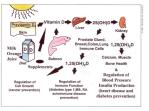 (HealthDay News) -- Calcitriol, the activated form of vitamin D, helped reduce bloods clots in cancer patients, U.S. researchers report.
The study, conducted by a team from the Oregon Health & Science University (OHSU) Cancer Institute in Portland, included 250 patients with advanced prostate cancer.
According to the researchers, patients who received high-dose calcitriol (DN-101) along with the chemotherapy drug Docetaxel had significantly fewer venous and arterial blood clots than patients who received a placebo and Docetaxel.
The findings were published online in the British Journal of Haematology and were expected to be in the November print issue of the journal.
"Blood clots, including life-threatening events such as stroke, heart attacks, and clots in the lungs are serious complications of advanced cancer and cancer chemotherapy. Reducing such blood clots would make a big difference for cancer patients," principal investigator Dr. Tomasz M. Beer, director of the prostate cancer program at the OHSU Cancer Institute, said in a prepared statement.
More research is needed in order to confirm whether high-dose calcitriol (DN-101) does reduce blood clots in cancer patients.
DN-101 is made by Novacea Inc. Both OHSU and Beer have significant financial interest in Novacea.
More information
The U.S. Food and Drug Administration offers tips on preventing blood clots in the legs during long trips.
Friday, October 06, 2006
'Chemo Brain' in Cancer Survivors Is Real: Study
(HealthDay News) -- "Chemo brain," characterized by chronic problems with memory and attention, afflicts a sizeable minority of cancer survivors.
Now, researchers say the condition may be linked to brain metabolism and blood flow changes that can endure for more than a decade.
The new study, published in the Oct. 5 online edition of Breast Cancer Research and Treatment, should help refute the view that chemo brain is just a figment of patients' imaginations.
"Many women who have had chemo for breast cancer are suffering from cognitive problems for many years after their chemo is finished, and this is the first direct examination of the brain that identifies long-term, if not permanent, changes in brain metabolism related to those cognitive problems," said study lead author Dr. Daniel H.S. Silverman, of the department of molecular and medical pharmacology at the University of California's David Geffen School of Medicine in Los Angeles.
Although chemo brain has been spotted among survivors of other forms of cancer, such as lymphoma, Silverman's group focused on breast cancer patients because the disease is the second-leading cancer killer of American women after lung cancer.
Each year, more than 211,000 American women are diagnosed with breast cancer, the researchers noted, and anywhere from approximately 25 percent to 80 percent of those who undergo chemotherapy complain of later onset of cognitive difficulties.
Silverman stressed, however, that not every breast cancer patient who undergoes chemo suffers from chemo brain, and that many of those who do experience only mild symptoms.
"The impact tends to be relatively subtle," Silverman said. "These are not basic losses of cognition that are going to be noticed when doing easy things. It's more a question of being unable to maintain attention and concentrate when trying to accomplish demanding and high-functioning tasks."
Nevertheless, for some of those who experience this cognitive disruption, the impact can be debilitating. That's why Silverman and his colleagues looked for underlying mechanisms to better understand the condition.
Using positron emission tomography -- commonly known as PET -- the UCLA team scanned the brains of 21 former breast cancer patients who had had tumors surgically removed between five and 10 years prior to this study.
Sixteen of the women had undergone chemotherapy, while the remaining five had had surgery alone. Scans were also conducted for 13 women of similar age and backgrounds with no history of breast cancer or chemotherapy.
The researchers observed brain blood-flow patterns as participants engaged in short-term memory exercises lasting about 10 minutes. They also measured brain metabolism after the exercise.
Silverman's team found that the post-chemo patients experienced relatively large blood flow "spikes" to certain parts of the brain when performing the mental tasks. This group also executed the tasks 13 percent less well than the non-chemo and non-cancer groups.
As well, former chemotherapy recipients showed relatively low brain metabolism rates in the frontal cortex after the tasks were completed, the researchers noted.
Participants who had undergone both chemotherapy and hormonal treatments also showed about an eight percent drop in their resting metabolism in a region of the brain called the basal ganglia.
The basal ganglia is known to function as a bridge between thought and action, the researchers noted.
Putting all the facts together, Silverman's team said the task-related blood flow jumps in the brains of former chemotherapy recipients indicated increased brain activity. That may mean that the chemo group were starting from a neurological disadvantage -- working harder (and with less success) to complete the tasks than those who had never undergone such treatment.
"Chemo-brain symptoms are the single biggest impediment to the quality of life of long-term breast cancer survivors who are getting chemo at earlier and earlier stages and living longer, or even to full life expectancy," noted Silverman. "So, of course, this is discouraging news if you're trying to do something for the affected patients after the fact."
"But on the other hand," he noted, "these findings could ultimately be very encouraging in terms of trying to prevent this, because you could perhaps identify patterns of brain metabolism that could help steer individual patients toward therapy regimens that would be least harmful for them, or to terminate therapies before they cause permanent brain damage."
Dr. Claudine Isaacs, director of the clinical breast cancer program at Georgetown University, said the study was interesting but inconclusive.
"These are very provocative findings, and I think this is the way we need to go in terms of utilizing imaging studies to better understand the problem," she said. "But to know what all this means is another thing."
"The problem is that this is so multi-factorial," cautioned Isaacs. "There are so many things that go into this -- age-related influences, menopause -- and it's very difficult to tease out the different parts."
"It is also true," she added, "that other studies in this area have shown that a relative minority of patients are affected by this phenomenon, and that in substantial numbers, the problems resolve over time among those who are. So, the situation is not necessarily forever."
More information
To learn more about chemo brain, visit the American Cancer Society.
Now, researchers say the condition may be linked to brain metabolism and blood flow changes that can endure for more than a decade.
The new study, published in the Oct. 5 online edition of Breast Cancer Research and Treatment, should help refute the view that chemo brain is just a figment of patients' imaginations.
"Many women who have had chemo for breast cancer are suffering from cognitive problems for many years after their chemo is finished, and this is the first direct examination of the brain that identifies long-term, if not permanent, changes in brain metabolism related to those cognitive problems," said study lead author Dr. Daniel H.S. Silverman, of the department of molecular and medical pharmacology at the University of California's David Geffen School of Medicine in Los Angeles.
Although chemo brain has been spotted among survivors of other forms of cancer, such as lymphoma, Silverman's group focused on breast cancer patients because the disease is the second-leading cancer killer of American women after lung cancer.
Each year, more than 211,000 American women are diagnosed with breast cancer, the researchers noted, and anywhere from approximately 25 percent to 80 percent of those who undergo chemotherapy complain of later onset of cognitive difficulties.
Silverman stressed, however, that not every breast cancer patient who undergoes chemo suffers from chemo brain, and that many of those who do experience only mild symptoms.
"The impact tends to be relatively subtle," Silverman said. "These are not basic losses of cognition that are going to be noticed when doing easy things. It's more a question of being unable to maintain attention and concentrate when trying to accomplish demanding and high-functioning tasks."
Nevertheless, for some of those who experience this cognitive disruption, the impact can be debilitating. That's why Silverman and his colleagues looked for underlying mechanisms to better understand the condition.
Using positron emission tomography -- commonly known as PET -- the UCLA team scanned the brains of 21 former breast cancer patients who had had tumors surgically removed between five and 10 years prior to this study.
Sixteen of the women had undergone chemotherapy, while the remaining five had had surgery alone. Scans were also conducted for 13 women of similar age and backgrounds with no history of breast cancer or chemotherapy.
The researchers observed brain blood-flow patterns as participants engaged in short-term memory exercises lasting about 10 minutes. They also measured brain metabolism after the exercise.
Silverman's team found that the post-chemo patients experienced relatively large blood flow "spikes" to certain parts of the brain when performing the mental tasks. This group also executed the tasks 13 percent less well than the non-chemo and non-cancer groups.
As well, former chemotherapy recipients showed relatively low brain metabolism rates in the frontal cortex after the tasks were completed, the researchers noted.
Participants who had undergone both chemotherapy and hormonal treatments also showed about an eight percent drop in their resting metabolism in a region of the brain called the basal ganglia.
The basal ganglia is known to function as a bridge between thought and action, the researchers noted.
Putting all the facts together, Silverman's team said the task-related blood flow jumps in the brains of former chemotherapy recipients indicated increased brain activity. That may mean that the chemo group were starting from a neurological disadvantage -- working harder (and with less success) to complete the tasks than those who had never undergone such treatment.
"Chemo-brain symptoms are the single biggest impediment to the quality of life of long-term breast cancer survivors who are getting chemo at earlier and earlier stages and living longer, or even to full life expectancy," noted Silverman. "So, of course, this is discouraging news if you're trying to do something for the affected patients after the fact."
"But on the other hand," he noted, "these findings could ultimately be very encouraging in terms of trying to prevent this, because you could perhaps identify patterns of brain metabolism that could help steer individual patients toward therapy regimens that would be least harmful for them, or to terminate therapies before they cause permanent brain damage."
Dr. Claudine Isaacs, director of the clinical breast cancer program at Georgetown University, said the study was interesting but inconclusive.
"These are very provocative findings, and I think this is the way we need to go in terms of utilizing imaging studies to better understand the problem," she said. "But to know what all this means is another thing."
"The problem is that this is so multi-factorial," cautioned Isaacs. "There are so many things that go into this -- age-related influences, menopause -- and it's very difficult to tease out the different parts."
"It is also true," she added, "that other studies in this area have shown that a relative minority of patients are affected by this phenomenon, and that in substantial numbers, the problems resolve over time among those who are. So, the situation is not necessarily forever."
More information
To learn more about chemo brain, visit the American Cancer Society.
Wednesday, May 24, 2006
Do Diet and Exercise Prevent Breast Cancer Recurrence?
Do Diet and Exercise Prevent Breast Cancer Recurrence?
Provided by: DrWeil.com
Q: I'm a breast cancer survivor. I read that a low-fat diet reduces the risk of a recurrence. I was treated three years ago. Do you think that the diet can help me? What about exercise? -- Maureen A: A low-fat diet certainly couldn't hurt, and a new study shows that getting regular exercise can help a lot. The news that a low-fat diet reduces the rate of breast cancer recurrence comes from a study reported recently at a meeting of the American Society of Clinical Oncology. It is the first study to demonstrate that diet directly affects breast cancer.
Of the 975 women who followed a low-fat diet, 96 (or 9.8 percent) had recurrences of their breast cancer over a five-year period compared to 181 (or 12.4 percent) of the 1,462 women who stayed on their usual diet. All of the women had undergone surgery (lumpectomy or mastectomy) followed by radiation and then hormonal therapy or chemotherapy when indicated. The women were assigned to the low-fat diet at random.
Although researchers said that more study is needed before recommending low- fat diets to all breast cancer patients, there is no reason not to cut your fat intake. Doing so will also reduce your risk of heart disease, and, if necessary, help you lose weight. (Simply losing weight after breast cancer treatment has been shown to reduce the risk of recurrence.) Interestingly, the women whose recurrence rate was lowest on the low-fat diet were those whose breast cancers were estrogen receptor negative, meaning that they didn't depend on estrogen to grow.
Researchers from the University of California at Los Angeles who conducted the low-fat diet study limited the women to an average of 33.3 grams of fat per day, a little more than one ounce of fat, compared to the 51.2 grams of fat per day consumed by the women who followed their usual diets. I still recommend that however much fat you eat, you try to choose the right kinds - monounsaturated fat found in olive oil, nuts and avocados, and omega-3-rich fat from cold water fish, flax (try freshly ground flaxseeds), and walnuts. Also choose low-glycemic carbohydrates and lean sources of protein.
As far as exercise is concerned, a study published in the May 25, 2005 issue of the Journal of the American Medical Association found that it improved survival among women who have had breast cancer even if they walked as little as an hour a week. The authors noted that after a breast cancer diagnosis, women decrease their levels of physical activity by two hours a week and that even greater decreases have been seen among obese women.
The researchers found that the risk of death from breast cancer for women who have had breast cancer and walk at least an hour a week at a pace of two to 2.9 miles per hour was 20 percent lower than those who got less exercise or none at all. Those who walked three to five hours a week had a risk of death 50 percent lower than those who got little or no exercise. Those who got even more exercise also reduced their risk of death but, unaccountably, by somewhat less than 50 percent.
These findings make a lot of sense when you consider that physical activity affects circulating hormones. Lower estrogen levels among the physically active women might explain their improved survival, according to the study authors. (They noted that the benefit of physical activity was particularly apparent among women whose breast tumors were fed by estrogen.) Overall, the study makes a strong case for continuing to get regular exercise after a breast cancer diagnosis.
Andrew Weil, MD
Last Reviewed: June 2005
Provided by: DrWeil.com
Q: I'm a breast cancer survivor. I read that a low-fat diet reduces the risk of a recurrence. I was treated three years ago. Do you think that the diet can help me? What about exercise? -- Maureen A: A low-fat diet certainly couldn't hurt, and a new study shows that getting regular exercise can help a lot. The news that a low-fat diet reduces the rate of breast cancer recurrence comes from a study reported recently at a meeting of the American Society of Clinical Oncology. It is the first study to demonstrate that diet directly affects breast cancer.
Of the 975 women who followed a low-fat diet, 96 (or 9.8 percent) had recurrences of their breast cancer over a five-year period compared to 181 (or 12.4 percent) of the 1,462 women who stayed on their usual diet. All of the women had undergone surgery (lumpectomy or mastectomy) followed by radiation and then hormonal therapy or chemotherapy when indicated. The women were assigned to the low-fat diet at random.
Although researchers said that more study is needed before recommending low- fat diets to all breast cancer patients, there is no reason not to cut your fat intake. Doing so will also reduce your risk of heart disease, and, if necessary, help you lose weight. (Simply losing weight after breast cancer treatment has been shown to reduce the risk of recurrence.) Interestingly, the women whose recurrence rate was lowest on the low-fat diet were those whose breast cancers were estrogen receptor negative, meaning that they didn't depend on estrogen to grow.
Researchers from the University of California at Los Angeles who conducted the low-fat diet study limited the women to an average of 33.3 grams of fat per day, a little more than one ounce of fat, compared to the 51.2 grams of fat per day consumed by the women who followed their usual diets. I still recommend that however much fat you eat, you try to choose the right kinds - monounsaturated fat found in olive oil, nuts and avocados, and omega-3-rich fat from cold water fish, flax (try freshly ground flaxseeds), and walnuts. Also choose low-glycemic carbohydrates and lean sources of protein.
As far as exercise is concerned, a study published in the May 25, 2005 issue of the Journal of the American Medical Association found that it improved survival among women who have had breast cancer even if they walked as little as an hour a week. The authors noted that after a breast cancer diagnosis, women decrease their levels of physical activity by two hours a week and that even greater decreases have been seen among obese women.
The researchers found that the risk of death from breast cancer for women who have had breast cancer and walk at least an hour a week at a pace of two to 2.9 miles per hour was 20 percent lower than those who got less exercise or none at all. Those who walked three to five hours a week had a risk of death 50 percent lower than those who got little or no exercise. Those who got even more exercise also reduced their risk of death but, unaccountably, by somewhat less than 50 percent.
These findings make a lot of sense when you consider that physical activity affects circulating hormones. Lower estrogen levels among the physically active women might explain their improved survival, according to the study authors. (They noted that the benefit of physical activity was particularly apparent among women whose breast tumors were fed by estrogen.) Overall, the study makes a strong case for continuing to get regular exercise after a breast cancer diagnosis.
Andrew Weil, MD
Last Reviewed: June 2005
Tuesday, February 07, 2006
Chemotherapy Quotes
"Two to 4% of cancers respond to chemotherapy….The bottom line is for a few kinds of cancer chemo is a life extending procedure---Hodgkin's disease, Acute Lymphocytic Leukemia (ALL), Testicular cancer, and Choriocarcinoma."---Ralph Moss, Ph.D. 1995 Author of Questioning Chemotherapy.
"NCI now actually anticipates further increases, and not decreases, in cancer mortality rates, from 171/100,000 in 1984 to 175/100,000 by the year 2000!"--Samuel Epstein.
"A study of over 10,000 patients shows clearly that chemo’s supposedly strong track record with Hodgkin’s disease (lymphoma) is actually a lie. Patients who underwent chemo were 14 times more likely to develop leukemia and 6 times more likely to develop cancers of the bones, joints, and soft tissues than those patients who did not undergo chemotherapy (NCI Journal 87:10)."—John Diamond
Children who are successfully treated for Hodgkin's disease are 18 times more likely later to develop secondary malignant tumours. Girls face a 35 per cent chance of developing breast cancer by the time they are 40---which is 75 times greater than the average. The risk of leukemia increased markedly four years after the ending of successful treatment, and reached a plateau after 14 years, but the risk of developing solid tumours remained high and approached 30 per cent at 30 years (New Eng J Med, March 21, 1996)
"Success of most chemotherapy is appalling…There is no scientific evidence for its ability to extend in any appreciable way the lives of patients suffering from the most common organic cancer…chemotherapy for malignancies too advanced for surgery which accounts for 80% of all cancers is a scientific wasteland."---Dr Ulrich Abel. 1990
The New England Journal of Medicine Reports— War on Cancer Is a Failure: Despite $30 billion spent on research and treatments since 1970, cancer remains "undefeated," with a death rate not lower but 6% higher in 1997 than 1970, stated John C. Bailar III, M.D., Ph.D., and Heather L. Gornik, M.H.S., both of the Department of Health Studies at the University of Chicago in Illinois. "The war against cancer is far from over," stated Dr. Bailar. "The effect of new treatments for cancer on mortality has been largely disappointing."
"My studies have proved conclusively that untreated cancer victims live up to four times longer than treated individuals. If one has cancer and opts to do nothing at all, he will live longer and feel better than if he undergoes radiation, chemotherapy or surgery, other than when used in immediate life-threatening situations."---Prof Jones. (1956 Transactions of the N.Y. Academy of Medical Sciences, vol 6. There is a fifty page article by Hardin Jones of National Cancer Institute of Bethesda, Maryland. He surveyed global cancer of all types and compared the untreated and the treated, to conclude that the untreated outlives the treated, both in terms of quality and in terms of quantity. Secondly he said, "Cancer does not cure". Third he said "There is a physiological mechanism which finishes off an individual".)
"With some cancers, notably liver, lung, pancreas, bone and advanced breast, our 5 year survival from traditional therapy alone is virtually the same as it was 30 years ago."---P Quillin, Ph.D.
"1.7% increase in terms of success rate a year, its nothing. By the time we get to the 24 century we might have effective treatments, Star Trek will be long gone by that time." Ralph Moss.
"….chemotherapy’s success record is dismal. It can achieve remissions in about 7% of all human cancers; for an additional 15% of cases, survival can be "prolonged" beyond the point at which death would be expected without treatment. This type of survival is not the same as a cure or even restored quality of life."—John Diamond, M.D.
"Keep in mind that the 5 year mark is still used as the official guideline for "cure" by mainstream oncologists. Statistically, the 5 year cure makes chemotherapy look good for certain kinds of cancer, but when you follow cancer patients beyond 5 years, the reality often shifts in a dramatic way."—Diamond.
Studies show that women taking tamoxifen after surviving breast cancer then have a high propensity to develop endometrial cancer. The NCI and Zeneca Pharmaceuticals, which makes the drug, aggressively lobbied State of California regulators to keep them from adding tamoxifen to their list of carcinogens. Zeneca is one of the sponsors of Breast Cancer Awareness Month.
"Most cancer patients in this country die of chemotherapy…Chemotherapy does not eliminate breast, colon or lung cancers. This fact has been documented for over a decade. Yet doctors still use chemotherapy for these tumours…Women with breast cancer are likely to die faster with chemo than without it."—Alan Levin, M.D.
According to the Cancer Statistics for 1995, published by the ACS in their small journal (2), the 5-year survival rate has improved from 50%-56% for whites and 39%-40% for blacks from 1974/1976 - 1983/1990. However, the data is taken from FIVE of the states with the lowest death rates AND the smallest populations! NONE of the 10 states with the highest death rates AND comprising 34% of the Total U.S. Cancer Deaths, were included in the data! Also, in prior years, the Composite (Ave.) 5-year survival rate for ALL Cancers Combined was computed and published. This Ave. 5-year survival crept upward to 50%, in the early nineties. It now stands around 51-52%, due primarily to the improvement of 11% survival for Colon and 13% increased survival for Prostate. It gets worse. The ACS boasts of "statistically significant" results when Uterine Ca survival drops from 89%/60%-85%/55% (W/B)?? Also, Pancreas Ca is 3-3 (W) and Laryngeal Ca survival drops from 59%-53% (B) while Cervical Ca drops from 63%-56% (B). Liver Ca improves from 4%-7%. I wonder how many Pancreatic and Hepatic Ca patients cheered these dramatic results? Ovarian Ca = 36%/40% - 42%/38% (W/B) and Breast Ca = 75%/63% - 82%/66% (W/B). In 16 years the Breast Ca rate improved 3-7%, while Uterine Ca decreased 4-5%. Aren't these marvelous results that the Cancer Establishment should boast about??---RD Hodgell, M.D.
"The five year cancer survival statistics of the American Cancer Society are very misleading. They now count things that are not cancer, and, because we are able to diagnose at an earlier stage of the disease, patients falsely appear to live longer. Our whole cancer research in the past 20 years has been a failure. More people over 30 are dying from cancer than ever before…More women with mild or benign diseases are being included in statistics and reported as being "cured".
When government officials point to survival figures and say they are winning the war against cancer they are using those survival rates improperly."---Dr J. Bailer, New England Journal of Medicine (Dr Bailer’s answer to questions put by Neal Barnard MD of the Physicians Committee For Responsible Medicine and published in PCRM Update, sept/oct 1990.
"I look upon cancer in the same way that I look upon heart disease, arthritis, high blood pressure, or even obesity, for that matter, in that by dramatically strengthening the body's immune system through diet, nutritional supplements, and exercise, the body can rid itself of the cancer, just as it does in other degenerative diseases. Consequently, I wouldn't have chemotherapy and radiation because I'm not interested in therapies that cripple the immune system, and, in my opinion, virtually ensure failure for the majority of cancer patients."---Dr Julian Whitaker, M.D.
"Finding a cure for cancer is absolutely contraindicated by the profits of the cancer industry’s chemotherapy, radiation, and surgery cash trough."—Dr Diamond, M.D.
"We have a multi-billion dollar industry that is killing people, right and left, just for financial gain. Their idea of research is to see whether two doses of this poison is better than three doses of that poison."—Glen Warner, M.D. oncologist.
John Robbins:
"Percentage of cancer patients whose lives are predictably saved by chemotherapy - 3%
Conclusive evidence (majority of cancers) that chemotherapy has any positive influcence on survival or quality of life - none.
Percentage of oncologists who said if they had cancer they would not participate in chemotherapy trials due to its "ineffectiveness and its unacceptable toxicity" - 75%
Percentage of people with cancer in the U.S. who receive chemotherapy - 75%.
Company that accounts for nearly half of the chemotherapy sales in the world - Bristol-Meyers Squibb.
Chairman of the board of Bristol-Meyers - Richard L. Gelb.
Mr. Gelb's other job: vice chairman, board of overseers, board of managers, Memorial Sloan-Kettering Cancer Center, World's largest private cancer treatment and research center.
Chairman, Memorial Sloan-Kettering's board of overseers, board of managers - John S. Reed.
Reed's other job - director, Philip Morris (tobacco company).
Director, Ivax, Inc., a prominent chemotherapy company - Samuel Broder.
Broder's other job (until 1995) - executive director, National Cancer Institute."from Reclaiming Our Health: Exploding the Medical Myth and Embracing the Source of True Healing by John Robbins.
"If you can shrink the tumour 50% or more for 28 days you have got the FDA's definition of an active drug. That is called a response rate, so you have a response..(but) when you look to see if there is any life prolongation from taking this treatment what you find is all kinds of hocus pocus and song and dance about the disease free survival, and this and that. In the end there is no proof that chemotherapy in the vast majority of cases actually extends life, and this is the GREAT LIE about chemotherapy, that somehow there is a correlation between shrinking a tumour and extending the life of the patient."---Ralph Moss
"The majority of publications equate the effect of chemotherapy with (tumour) response, irrespective of survival. Many oncologists take it for granted that response to therapy prolongs survival, an opinion which is based on a fallacy and which is not supported by clinical studies. To date there is no clear evidence that the treated patients, as a whole, benefit from chemotherapy as to their quality of life."---Abel.1990.
"For the majority of the cancers we examined, the actual improvements (in survival) have been small or have been overestimated by the published rates...It is difficult to find that there has been much progress...(For breast cancer), there is a slight improvement...(which) is considerably less than reported."---General Accounting Office
"As a chemist trained to interpret data, it is incromprehensible to me that physicians can ignore the clear evidence that chemotherapy does much, much more harm than good."---Alan Nixon, Ph.D., Past President, American Chemical Society.
"He said, "I'm giving cancer patients over here at this major cancer clinic drugs that are killing them, and I can't stop it because they say the protocol's what's important." And I say, "But the patient's not doing well." They say, "The protocol's what's important, not the patient." And he said, "You can't believe what goes on in the name of medicine and science in this country." --Gary Null
The Politics of Cancer---Epstein
That in spite of over $20 billion expenditures since the "War against Cancer" was launched by President Nixon in 1971, there has been little if any significant improvement in treatment and survival rates for most common cancers, in spite of contrary misleading hype by the cancer establishment---the National Cancer Institute (NCI) and American Cancer Society (ACS).
That the cancer establishment remains myopically fixated on damage control _diagnosis and treatment _ and basic genetic research, with, not always benign, indifference to cancer prevention. Meanwhile, the incidence of cancer, including nonsmoking cancers, has escalated to epidemic proportions with lifetime cancer risks now approaching 50%.
That the NCI has a long track record of budgetary shell games in efforts to mislead Congress and the public with its claim that it allocates substantial resources to cancer prevention. Over the last year, the NCI has made a series of widely divergent claims, ranging from $480 million to $1 billion, for its prevention budget while realistic estimates are well under $100 million.
That the NCI allocates less than 1% of its budget to research on occupational cancer _ the most avoidable of all cancers _ which accounts for well over 10% of all adult cancer deaths, besides being a major cause of childhood cancer.
That cancer establishment policies, particularly those of the ACS, are strongly influenced by pervasive conflicts of interest with the cancer drug and other industries. As admitted by former NCI director Samuel Broder, the NCI has become "what amounts to a governmental pharmaceutical company."
That the MD Anderson Comprehensive Cancer Center was sued in August, 1998 for making unsubstantiated claims that it cures "well over 50% of people with cancer."
That the NCI, with enthusiastic support from the ACS _ the tail that wags the NCI dog _ has effectively blocked funding for research and clinical trials on promising non-toxic alternative cancer drugs for decades, in favor of highly toxic and largely ineffective patented drugs developed by the multibillion dollar global cancer drug industry. Additionally, the cancer establishment has systematically harassed the proponents of non-toxic alternative cancer drugs.
That, as reported in The Chronicle of Philanthropy, the ACS is "more interested in accumulating wealth than saving lives." Furthermore, it is the only known "charity" that makes contributions to political parties.
That the NCI and ACS have embarked on unethical trials with two hormonal drugs, tamoxifen and Evista, in ill-conceived attempts to prevent breast cancer in healthy women while suppressing evidence that these drugs are known to cause liver and ovarian cancer, respectively, and in spite of the short-term lethal complications of tamoxifen.
The establishment also proposes further chemoprevention trials this fall on tamoxifen, and also Evista, in spite of two published long-term European studies on the ineffectiveness of tamoxifen. This represents medical malpractice verging on the criminal.
That the ACS and NCI have failed to provide Congress and regulatory agencies with available scientific information on a wide range of unwitting exposures to avoidable carcinogens in air, water, the workplace, and consumer products _food, cosmetics and toiletries, and household products. As a result, corrective legislative and regulatory action have not been taken.
That the cancer establishment has also failed to provide the public, particularly African American and underprivileged ethnic groups with their disproportionately higher cancer incidence rates, with information on avoidable carcinogenic exposures, thus depriving them of their right-to-know and effectively preventing them from taking action to protect themselves _ a flagrant denial of environmental justice.
more info at:
"NCI now actually anticipates further increases, and not decreases, in cancer mortality rates, from 171/100,000 in 1984 to 175/100,000 by the year 2000!"--Samuel Epstein.
"A study of over 10,000 patients shows clearly that chemo’s supposedly strong track record with Hodgkin’s disease (lymphoma) is actually a lie. Patients who underwent chemo were 14 times more likely to develop leukemia and 6 times more likely to develop cancers of the bones, joints, and soft tissues than those patients who did not undergo chemotherapy (NCI Journal 87:10)."—John Diamond
Children who are successfully treated for Hodgkin's disease are 18 times more likely later to develop secondary malignant tumours. Girls face a 35 per cent chance of developing breast cancer by the time they are 40---which is 75 times greater than the average. The risk of leukemia increased markedly four years after the ending of successful treatment, and reached a plateau after 14 years, but the risk of developing solid tumours remained high and approached 30 per cent at 30 years (New Eng J Med, March 21, 1996)
"Success of most chemotherapy is appalling…There is no scientific evidence for its ability to extend in any appreciable way the lives of patients suffering from the most common organic cancer…chemotherapy for malignancies too advanced for surgery which accounts for 80% of all cancers is a scientific wasteland."---Dr Ulrich Abel. 1990
The New England Journal of Medicine Reports— War on Cancer Is a Failure: Despite $30 billion spent on research and treatments since 1970, cancer remains "undefeated," with a death rate not lower but 6% higher in 1997 than 1970, stated John C. Bailar III, M.D., Ph.D., and Heather L. Gornik, M.H.S., both of the Department of Health Studies at the University of Chicago in Illinois. "The war against cancer is far from over," stated Dr. Bailar. "The effect of new treatments for cancer on mortality has been largely disappointing."
"My studies have proved conclusively that untreated cancer victims live up to four times longer than treated individuals. If one has cancer and opts to do nothing at all, he will live longer and feel better than if he undergoes radiation, chemotherapy or surgery, other than when used in immediate life-threatening situations."---Prof Jones. (1956 Transactions of the N.Y. Academy of Medical Sciences, vol 6. There is a fifty page article by Hardin Jones of National Cancer Institute of Bethesda, Maryland. He surveyed global cancer of all types and compared the untreated and the treated, to conclude that the untreated outlives the treated, both in terms of quality and in terms of quantity. Secondly he said, "Cancer does not cure". Third he said "There is a physiological mechanism which finishes off an individual".)
"With some cancers, notably liver, lung, pancreas, bone and advanced breast, our 5 year survival from traditional therapy alone is virtually the same as it was 30 years ago."---P Quillin, Ph.D.
"1.7% increase in terms of success rate a year, its nothing. By the time we get to the 24 century we might have effective treatments, Star Trek will be long gone by that time." Ralph Moss.
"….chemotherapy’s success record is dismal. It can achieve remissions in about 7% of all human cancers; for an additional 15% of cases, survival can be "prolonged" beyond the point at which death would be expected without treatment. This type of survival is not the same as a cure or even restored quality of life."—John Diamond, M.D.
"Keep in mind that the 5 year mark is still used as the official guideline for "cure" by mainstream oncologists. Statistically, the 5 year cure makes chemotherapy look good for certain kinds of cancer, but when you follow cancer patients beyond 5 years, the reality often shifts in a dramatic way."—Diamond.
Studies show that women taking tamoxifen after surviving breast cancer then have a high propensity to develop endometrial cancer. The NCI and Zeneca Pharmaceuticals, which makes the drug, aggressively lobbied State of California regulators to keep them from adding tamoxifen to their list of carcinogens. Zeneca is one of the sponsors of Breast Cancer Awareness Month.
"Most cancer patients in this country die of chemotherapy…Chemotherapy does not eliminate breast, colon or lung cancers. This fact has been documented for over a decade. Yet doctors still use chemotherapy for these tumours…Women with breast cancer are likely to die faster with chemo than without it."—Alan Levin, M.D.
According to the Cancer Statistics for 1995, published by the ACS in their small journal (2), the 5-year survival rate has improved from 50%-56% for whites and 39%-40% for blacks from 1974/1976 - 1983/1990. However, the data is taken from FIVE of the states with the lowest death rates AND the smallest populations! NONE of the 10 states with the highest death rates AND comprising 34% of the Total U.S. Cancer Deaths, were included in the data! Also, in prior years, the Composite (Ave.) 5-year survival rate for ALL Cancers Combined was computed and published. This Ave. 5-year survival crept upward to 50%, in the early nineties. It now stands around 51-52%, due primarily to the improvement of 11% survival for Colon and 13% increased survival for Prostate. It gets worse. The ACS boasts of "statistically significant" results when Uterine Ca survival drops from 89%/60%-85%/55% (W/B)?? Also, Pancreas Ca is 3-3 (W) and Laryngeal Ca survival drops from 59%-53% (B) while Cervical Ca drops from 63%-56% (B). Liver Ca improves from 4%-7%. I wonder how many Pancreatic and Hepatic Ca patients cheered these dramatic results? Ovarian Ca = 36%/40% - 42%/38% (W/B) and Breast Ca = 75%/63% - 82%/66% (W/B). In 16 years the Breast Ca rate improved 3-7%, while Uterine Ca decreased 4-5%. Aren't these marvelous results that the Cancer Establishment should boast about??---RD Hodgell, M.D.
"The five year cancer survival statistics of the American Cancer Society are very misleading. They now count things that are not cancer, and, because we are able to diagnose at an earlier stage of the disease, patients falsely appear to live longer. Our whole cancer research in the past 20 years has been a failure. More people over 30 are dying from cancer than ever before…More women with mild or benign diseases are being included in statistics and reported as being "cured".
When government officials point to survival figures and say they are winning the war against cancer they are using those survival rates improperly."---Dr J. Bailer, New England Journal of Medicine (Dr Bailer’s answer to questions put by Neal Barnard MD of the Physicians Committee For Responsible Medicine and published in PCRM Update, sept/oct 1990.
"I look upon cancer in the same way that I look upon heart disease, arthritis, high blood pressure, or even obesity, for that matter, in that by dramatically strengthening the body's immune system through diet, nutritional supplements, and exercise, the body can rid itself of the cancer, just as it does in other degenerative diseases. Consequently, I wouldn't have chemotherapy and radiation because I'm not interested in therapies that cripple the immune system, and, in my opinion, virtually ensure failure for the majority of cancer patients."---Dr Julian Whitaker, M.D.
"Finding a cure for cancer is absolutely contraindicated by the profits of the cancer industry’s chemotherapy, radiation, and surgery cash trough."—Dr Diamond, M.D.
"We have a multi-billion dollar industry that is killing people, right and left, just for financial gain. Their idea of research is to see whether two doses of this poison is better than three doses of that poison."—Glen Warner, M.D. oncologist.
John Robbins:
"Percentage of cancer patients whose lives are predictably saved by chemotherapy - 3%
Conclusive evidence (majority of cancers) that chemotherapy has any positive influcence on survival or quality of life - none.
Percentage of oncologists who said if they had cancer they would not participate in chemotherapy trials due to its "ineffectiveness and its unacceptable toxicity" - 75%
Percentage of people with cancer in the U.S. who receive chemotherapy - 75%.
Company that accounts for nearly half of the chemotherapy sales in the world - Bristol-Meyers Squibb.
Chairman of the board of Bristol-Meyers - Richard L. Gelb.
Mr. Gelb's other job: vice chairman, board of overseers, board of managers, Memorial Sloan-Kettering Cancer Center, World's largest private cancer treatment and research center.
Chairman, Memorial Sloan-Kettering's board of overseers, board of managers - John S. Reed.
Reed's other job - director, Philip Morris (tobacco company).
Director, Ivax, Inc., a prominent chemotherapy company - Samuel Broder.
Broder's other job (until 1995) - executive director, National Cancer Institute."from Reclaiming Our Health: Exploding the Medical Myth and Embracing the Source of True Healing by John Robbins.
"If you can shrink the tumour 50% or more for 28 days you have got the FDA's definition of an active drug. That is called a response rate, so you have a response..(but) when you look to see if there is any life prolongation from taking this treatment what you find is all kinds of hocus pocus and song and dance about the disease free survival, and this and that. In the end there is no proof that chemotherapy in the vast majority of cases actually extends life, and this is the GREAT LIE about chemotherapy, that somehow there is a correlation between shrinking a tumour and extending the life of the patient."---Ralph Moss
"The majority of publications equate the effect of chemotherapy with (tumour) response, irrespective of survival. Many oncologists take it for granted that response to therapy prolongs survival, an opinion which is based on a fallacy and which is not supported by clinical studies. To date there is no clear evidence that the treated patients, as a whole, benefit from chemotherapy as to their quality of life."---Abel.1990.
"For the majority of the cancers we examined, the actual improvements (in survival) have been small or have been overestimated by the published rates...It is difficult to find that there has been much progress...(For breast cancer), there is a slight improvement...(which) is considerably less than reported."---General Accounting Office
"As a chemist trained to interpret data, it is incromprehensible to me that physicians can ignore the clear evidence that chemotherapy does much, much more harm than good."---Alan Nixon, Ph.D., Past President, American Chemical Society.
"He said, "I'm giving cancer patients over here at this major cancer clinic drugs that are killing them, and I can't stop it because they say the protocol's what's important." And I say, "But the patient's not doing well." They say, "The protocol's what's important, not the patient." And he said, "You can't believe what goes on in the name of medicine and science in this country." --Gary Null
The Politics of Cancer---Epstein
That in spite of over $20 billion expenditures since the "War against Cancer" was launched by President Nixon in 1971, there has been little if any significant improvement in treatment and survival rates for most common cancers, in spite of contrary misleading hype by the cancer establishment---the National Cancer Institute (NCI) and American Cancer Society (ACS).
That the cancer establishment remains myopically fixated on damage control _diagnosis and treatment _ and basic genetic research, with, not always benign, indifference to cancer prevention. Meanwhile, the incidence of cancer, including nonsmoking cancers, has escalated to epidemic proportions with lifetime cancer risks now approaching 50%.
That the NCI has a long track record of budgetary shell games in efforts to mislead Congress and the public with its claim that it allocates substantial resources to cancer prevention. Over the last year, the NCI has made a series of widely divergent claims, ranging from $480 million to $1 billion, for its prevention budget while realistic estimates are well under $100 million.
That the NCI allocates less than 1% of its budget to research on occupational cancer _ the most avoidable of all cancers _ which accounts for well over 10% of all adult cancer deaths, besides being a major cause of childhood cancer.
That cancer establishment policies, particularly those of the ACS, are strongly influenced by pervasive conflicts of interest with the cancer drug and other industries. As admitted by former NCI director Samuel Broder, the NCI has become "what amounts to a governmental pharmaceutical company."
That the MD Anderson Comprehensive Cancer Center was sued in August, 1998 for making unsubstantiated claims that it cures "well over 50% of people with cancer."
That the NCI, with enthusiastic support from the ACS _ the tail that wags the NCI dog _ has effectively blocked funding for research and clinical trials on promising non-toxic alternative cancer drugs for decades, in favor of highly toxic and largely ineffective patented drugs developed by the multibillion dollar global cancer drug industry. Additionally, the cancer establishment has systematically harassed the proponents of non-toxic alternative cancer drugs.
That, as reported in The Chronicle of Philanthropy, the ACS is "more interested in accumulating wealth than saving lives." Furthermore, it is the only known "charity" that makes contributions to political parties.
That the NCI and ACS have embarked on unethical trials with two hormonal drugs, tamoxifen and Evista, in ill-conceived attempts to prevent breast cancer in healthy women while suppressing evidence that these drugs are known to cause liver and ovarian cancer, respectively, and in spite of the short-term lethal complications of tamoxifen.
The establishment also proposes further chemoprevention trials this fall on tamoxifen, and also Evista, in spite of two published long-term European studies on the ineffectiveness of tamoxifen. This represents medical malpractice verging on the criminal.
That the ACS and NCI have failed to provide Congress and regulatory agencies with available scientific information on a wide range of unwitting exposures to avoidable carcinogens in air, water, the workplace, and consumer products _food, cosmetics and toiletries, and household products. As a result, corrective legislative and regulatory action have not been taken.
That the cancer establishment has also failed to provide the public, particularly African American and underprivileged ethnic groups with their disproportionately higher cancer incidence rates, with information on avoidable carcinogenic exposures, thus depriving them of their right-to-know and effectively preventing them from taking action to protect themselves _ a flagrant denial of environmental justice.
more info at:
How Well Tested Are New Cancer Drugs?
by Maryann Napoli
With a certain amount of regularity a new cancer drug makes headlines, generating an enormous amount of hope as well as pressure to make the product swiftly available. In time, we usually learn that the drug’s benefit is much more modest than was originally portrayed in the media, and soon oncologists begin to prescribe the drug for other forms of cancer without waiting for clinical trials to prove its effectiveness.
Tumor Shrinkage
Contrary to popular belief, drug companies are not required to prove that their drugs prolong survival. Until the mid-1980s, all cancer drugs were approved solely on the basis of what researchers call the “tumor response.” In other words, a drug company needed only show that the drug caused a tumor to shrink, not necessarily to disappear.
Years ago, a change in the approval process was recommended by the FDA’s own Oncologic Drug Advisory Committee. The committee members, primarily cancer experts unaffiliated with any government agency, knew that tumor shrinkage often has little or no relation to survival. The committee proposed the novel idea that a drug company should be required to prove that a drug provided some benefit that was meaningful to the patient, such as increased survival or an improvement in symptoms. The committee argued further that the potential benefit of tumor shrinkage did not necessarily outweigh the substantial toxicity of cancer drugs.
This recommendation was made in the mid-1980s, but change at the FDA comes slowly, as a recent assessment of new drug approvals has demonstrated. From 1990 through 2001, the FDA approved 66 new cancer drugs. Prolonged survival was not proven for 48 drugs. And tumor response was the basis of approval for 35 drugs.
Variations in End Points
“The FDA has a certain amount of regulatory flexibility to make an assessment of the side effects versus the efficacy of new products,” said Richard Pazdur in a telephone interview. The director of oncology drug products at the FDA’s Center for Drug Evaluation and Treatment, Pazdur had been asked why so few new drugs have been proved to prolong survival.
“The drug company must prove that its product provides a longer life, a better life, or a favorable effect on an established end point for a better life,” he explained. The FDA’s flexibility comes into play on the last item, “an established end point for a better life.” One example of an established end point, says Pazdur, is a complete response in leukemia: that is, the bone marrow is normal and the blood counts have normalized.
Even so, there is a hierarchy of established end points. “Survival is the gold standard of end points because it is the most meaningful to all people,” Pazdur said. There can be no misinterpretation when the end point concerns survival: the patient is either dead or alive. “Whereas the other end points, such as tumor response rate, are usually determined by X-rays or scans,” he continued. “There can be variations in the radiologists, the techniques of how the X-rays or scans are obtained, which can make it confusing and unreliable. Also, there is a subjective judgment in reading these X-rays and scans.”
Accelerated Approval
These cautions notwithstanding, the FDA still allows the use of tumor shrinkage as the sole end point in the approval of certain drugs. In 1992, the agency introduced an accelerated approval (AA) process. The idea behind AA is to get drugs quickly to advanced-cancer patients in whom all available options have failed. Consequently, tumor shrinkage was the sole basis of the AA for 10 of 11 new drugs. The rationale: Shrinking a lung tumor might, in the FDA’s view, be “reasonably likely” to alleviate breathing difficulties.
The testing for AA is minimal. The new drug is given to about 30 or so participants who have run out of options. In what is called a phase II trial, there is no comparison group: everyone in the study gets the new drug. Consequently, this type of trial is not likely to provide a true picture of the drug’s toxicity or efficacy. That’s why a drug given AA must continue to be studied to see if it provides any benefit in terms of increased survival or symptom improvement. “The drug companies usually do a large trial in which the new drug is compared to the standard drug,” said Pazdur. “This usually takes two to four years.” And what if the drug company does not comply? “We have a process for rapidly removing the drug from the market,” Pazdur replied.
Still, some not so well tested drugs are available for several years following an AA, and oncologists are free to prescribe them for cancers other than the type for which the products received approval. Or, more often, oncologists can add the new product to a multiple-drug regimen that in itself has never been studied. “Yes, this is called off-label use, which is fairly common in the practice of oncology in the U.S.,” Pazdur agreed. “But this involves the practice of medicine, and the FDA does not control the practice of medicine.” Unless their oncologists tell them, cancer patients do not know whether they are being given a drug off-label. “We would like patients to read the drug label to see the approved indications and contraindications,” advised Pazdur, who said that the information is freely available at the FDA’s web site.
For More Information
To read a drug label, go to www.fda.gov or to the Physicians’ Desk Reference (PDR), which is updated yearly and available at most local libraries and large bookstores. The label is daunting for its extensive length, tiny type and medical jargon. It is, however, the only source for results of the FDA-required tests. The section entitled “Indications” will identify the purpose(s) for which the drug has been proven beneficial. If you can’t find your type and stage of cancer listed under “Indications,” this signals off-label use.
Unfortunately, only the rare cancer patient well versed in clinical trials will be able to discern whether the label is identifying a drug that has gone through the less-rigorous AA process. For example, capecitabine was given AA (on the basis of tumor response) for advanced breast cancer in 1998. The 2002 Physicians’ Desk Reference describes capecitabine’s testing as a “phase II, single-arm trial,” which signals AA. Another clue can be found under “Indications,” where response rate is described as the basis for the drug’s use for metastasized breast cancer. However, the much watered-down patient version of the capecitabine label (which appears after the information aimed at professionals) does not include an explanation of these terms. The patient’s label makes no mention of the fact that the drug was approved through the accelerated process. Capecitabine is sold under the brand name Xeloda.
Go to the web site of the National Cancer Institute, and then click into the following succession of options: “treatment,” “chemotherapy,” and “newly approved cancer treatments.” You will find explanations of phase II trials, off-label drug use (complete with Q and A: “Can off-label drug use be harmful?”), and many other relevant terms. People without access to the Internet can call the National Cancer Institute toll-free at 800/4-CANCER to get this information mailed to them.
When recommending a new cancer drug to a patient, oncologists will often quote “response rate” without explaining what it means. Ask. This article has addressed how new drugs receive FDA approval. But once on the market, they are often studied eventually in large randomized, controlled trials as part of a multiple-drug regimen.
Ask for the evidence to support a proposed chemotherapy regimen. Here’s one way to phrase the question: “Can you give me a citation for the studies that show this drug or drug-combination will benefit people with my stage and type of cancer?”
The citation will allow you to do a Medline search (ask the librarian at your local public library) to locate the study and determine the exact nature of the benefit. Medline is a service available through the National Library of Medicine. It provides free access to the abstracts, or summaries, of the studies published in a large proportion of the world’s medical journals. Some public libraries will retrieve the entire article at no charge, but the article can also be purchased on-line.
Maryann Napoli is the associate director of the Center for Medical Consumers in New York City. This article is adapted with permission from HealthFacts, the organization’s monthly newsletter.
ore info at:
http://www.dreddyclinic.com/findinformation/cc/skincancer.htm
With a certain amount of regularity a new cancer drug makes headlines, generating an enormous amount of hope as well as pressure to make the product swiftly available. In time, we usually learn that the drug’s benefit is much more modest than was originally portrayed in the media, and soon oncologists begin to prescribe the drug for other forms of cancer without waiting for clinical trials to prove its effectiveness.
Tumor Shrinkage
Contrary to popular belief, drug companies are not required to prove that their drugs prolong survival. Until the mid-1980s, all cancer drugs were approved solely on the basis of what researchers call the “tumor response.” In other words, a drug company needed only show that the drug caused a tumor to shrink, not necessarily to disappear.
Years ago, a change in the approval process was recommended by the FDA’s own Oncologic Drug Advisory Committee. The committee members, primarily cancer experts unaffiliated with any government agency, knew that tumor shrinkage often has little or no relation to survival. The committee proposed the novel idea that a drug company should be required to prove that a drug provided some benefit that was meaningful to the patient, such as increased survival or an improvement in symptoms. The committee argued further that the potential benefit of tumor shrinkage did not necessarily outweigh the substantial toxicity of cancer drugs.
This recommendation was made in the mid-1980s, but change at the FDA comes slowly, as a recent assessment of new drug approvals has demonstrated. From 1990 through 2001, the FDA approved 66 new cancer drugs. Prolonged survival was not proven for 48 drugs. And tumor response was the basis of approval for 35 drugs.
Variations in End Points
“The FDA has a certain amount of regulatory flexibility to make an assessment of the side effects versus the efficacy of new products,” said Richard Pazdur in a telephone interview. The director of oncology drug products at the FDA’s Center for Drug Evaluation and Treatment, Pazdur had been asked why so few new drugs have been proved to prolong survival.
“The drug company must prove that its product provides a longer life, a better life, or a favorable effect on an established end point for a better life,” he explained. The FDA’s flexibility comes into play on the last item, “an established end point for a better life.” One example of an established end point, says Pazdur, is a complete response in leukemia: that is, the bone marrow is normal and the blood counts have normalized.
Even so, there is a hierarchy of established end points. “Survival is the gold standard of end points because it is the most meaningful to all people,” Pazdur said. There can be no misinterpretation when the end point concerns survival: the patient is either dead or alive. “Whereas the other end points, such as tumor response rate, are usually determined by X-rays or scans,” he continued. “There can be variations in the radiologists, the techniques of how the X-rays or scans are obtained, which can make it confusing and unreliable. Also, there is a subjective judgment in reading these X-rays and scans.”
Accelerated Approval
These cautions notwithstanding, the FDA still allows the use of tumor shrinkage as the sole end point in the approval of certain drugs. In 1992, the agency introduced an accelerated approval (AA) process. The idea behind AA is to get drugs quickly to advanced-cancer patients in whom all available options have failed. Consequently, tumor shrinkage was the sole basis of the AA for 10 of 11 new drugs. The rationale: Shrinking a lung tumor might, in the FDA’s view, be “reasonably likely” to alleviate breathing difficulties.
The testing for AA is minimal. The new drug is given to about 30 or so participants who have run out of options. In what is called a phase II trial, there is no comparison group: everyone in the study gets the new drug. Consequently, this type of trial is not likely to provide a true picture of the drug’s toxicity or efficacy. That’s why a drug given AA must continue to be studied to see if it provides any benefit in terms of increased survival or symptom improvement. “The drug companies usually do a large trial in which the new drug is compared to the standard drug,” said Pazdur. “This usually takes two to four years.” And what if the drug company does not comply? “We have a process for rapidly removing the drug from the market,” Pazdur replied.
Still, some not so well tested drugs are available for several years following an AA, and oncologists are free to prescribe them for cancers other than the type for which the products received approval. Or, more often, oncologists can add the new product to a multiple-drug regimen that in itself has never been studied. “Yes, this is called off-label use, which is fairly common in the practice of oncology in the U.S.,” Pazdur agreed. “But this involves the practice of medicine, and the FDA does not control the practice of medicine.” Unless their oncologists tell them, cancer patients do not know whether they are being given a drug off-label. “We would like patients to read the drug label to see the approved indications and contraindications,” advised Pazdur, who said that the information is freely available at the FDA’s web site.
For More Information
To read a drug label, go to www.fda.gov or to the Physicians’ Desk Reference (PDR), which is updated yearly and available at most local libraries and large bookstores. The label is daunting for its extensive length, tiny type and medical jargon. It is, however, the only source for results of the FDA-required tests. The section entitled “Indications” will identify the purpose(s) for which the drug has been proven beneficial. If you can’t find your type and stage of cancer listed under “Indications,” this signals off-label use.
Unfortunately, only the rare cancer patient well versed in clinical trials will be able to discern whether the label is identifying a drug that has gone through the less-rigorous AA process. For example, capecitabine was given AA (on the basis of tumor response) for advanced breast cancer in 1998. The 2002 Physicians’ Desk Reference describes capecitabine’s testing as a “phase II, single-arm trial,” which signals AA. Another clue can be found under “Indications,” where response rate is described as the basis for the drug’s use for metastasized breast cancer. However, the much watered-down patient version of the capecitabine label (which appears after the information aimed at professionals) does not include an explanation of these terms. The patient’s label makes no mention of the fact that the drug was approved through the accelerated process. Capecitabine is sold under the brand name Xeloda.
Go to the web site of the National Cancer Institute, and then click into the following succession of options: “treatment,” “chemotherapy,” and “newly approved cancer treatments.” You will find explanations of phase II trials, off-label drug use (complete with Q and A: “Can off-label drug use be harmful?”), and many other relevant terms. People without access to the Internet can call the National Cancer Institute toll-free at 800/4-CANCER to get this information mailed to them.
When recommending a new cancer drug to a patient, oncologists will often quote “response rate” without explaining what it means. Ask. This article has addressed how new drugs receive FDA approval. But once on the market, they are often studied eventually in large randomized, controlled trials as part of a multiple-drug regimen.
Ask for the evidence to support a proposed chemotherapy regimen. Here’s one way to phrase the question: “Can you give me a citation for the studies that show this drug or drug-combination will benefit people with my stage and type of cancer?”
The citation will allow you to do a Medline search (ask the librarian at your local public library) to locate the study and determine the exact nature of the benefit. Medline is a service available through the National Library of Medicine. It provides free access to the abstracts, or summaries, of the studies published in a large proportion of the world’s medical journals. Some public libraries will retrieve the entire article at no charge, but the article can also be purchased on-line.
Maryann Napoli is the associate director of the Center for Medical Consumers in New York City. This article is adapted with permission from HealthFacts, the organization’s monthly newsletter.
ore info at:
http://www.dreddyclinic.com/findinformation/cc/skincancer.htm
The Truth About Cancer
The Truth About Cancer
The CDC just reported that only ½ to 1% of metastatic cancer patients live longer than 5 years. Another published article in Current Cancer Research stated that chemotherapy is now credited with remissions in only 7% of cancer cases. We can drastically increase these numbers. Global Healing Center has developed an individual or complementary approach, which is now available to you.
For many years, the focus on cancer treatment has centered on destroying the cancer cells. While reducing tumor burden can be of benefit, chemotherapy, radiation therapy, and surgery do not, in most instances, cure cancer. In order to cure cancer one must change the underlying causes of the disease.
Nutrition supplements and diet therapy help to change the underlying causes of cancer, and thus help the patient's "host defense mechanisms" better fight off the cancer cells. Comprehensive cancer treatment should always include an aggressive nutritional component as part of the overall therapy.
THE TRUTH ABOUT CANCER
Cancer- You have read about it - You hear about it -You see it on TV --- But there is one thing you are never told --- the TRUTH.
You are never told the truth about the incidence of cancer. It is growing by leaps and bounds. In 1960 1 out of 4 people had cancer. Today it is 1 out of 3. Soon it will be 1 out of 2. In just the last 30 years the incidence of cancer has gone up a shocking 40%. This year, well over 1,250,000 Americans will get cancer. And all of this while Americans are spending mega billions of dollars on cancer treatment and research.
You are never told the truth about cancer death. Death from cancer is on a rapid rise. It has now overtaken heart disease as America's # 1 killer. This year, over 650,000 Americans will die with cancer in spite of the best therapy that conventional medicine has to offer.
You are never told the truth about what causes cancer. usually it is caused by toxic chemicals, not only by tobacco, but primarily industrial chemicals, pollutants, & radioactive substances in our food, water, air, homes, & workplace. Recently, the FDA found significant traces of 60-80 pesticides in the average American food shopping basket. Incredibly, the government did nothing.
You are never told the truth about cancer prevention. We can lower our risk of cancer by eliminating carcinogens from our food, water, air, homes, and workplace. There is valid scientific evidence that we can now significantly lower the risk of cancer by purging the body of all toxins then go on a healthy diet and exercise regularly.
You are never told the truth about conventional cancer therapy. For decades, the cancer establishment has foolishly relied on the crude and primitive treatments of surgery, radiation, and chemotherapy as their only weapons. These therapies are generally very dangerous, toxic, and inefficient, but highly profitable for the conventional medical field. Many knowledgeable doctors say that radiation & chemotherapy is murder.
They never tell you that Europe, China, and other countries are far ahead of the U.S. in the prevention and cure of cancer. Those therapies that are successful in other countries are not allowed in the U.S. So much for physicians trying to heal you and the FDA protecting you.
You are never told that radiation & chemotherapy is a brew of deadly poisons. Like surgery & radiation, the goal of chemotherapy is to purge the body of cancer by destroying cancer cells. Because the cancer cells divide more rapidly than normal cells, chemotherapeutic agents target rapidly dividing cells.
You are never told other cells, such as those in the hair follicles, intestinal lining, & bone marrow, are also seriously affected. It destroys the hair follicles and fast-growing epithelial cells lining the digestive tract. This is why chemotherapy usually results in hair loss & gastrointestinal illness. The truth is, we are not winning the war against cancer.
Over the last 38 years chemotherapy has been unsuccessful in most cases to treat Cancer. Chemotherapy is still not approved by the FDA and continues to be in field trials. There is only one way to successfully treat Cancer and degenerative diseases and that is through the use of a whole body approach. You cannot drug a body into health. You must nourish the body, mind and soul. Cancer is a systemic disorder, which means it is in the whole body. It simply manifests itself in a particular organ or site. This is typically one's genetically weak link. This is why you cannot cut an organ out. 96% of all cancer survivors of chemotherapy have a relapse after 5 years. Cancer is an anaerobic organism (without oxygen), which thrives in acidic, low oxygen, dark, moist environment.
Cancer feeds on glucose and secretes lactic acid as a by-product. The liver then converts this lactic acid back into glucose, so you end up with a viscous cycle of the cancer feeding itself. In order to stop Cancer growth you must change the body to an alkaline state, provide high levels of oxygen to the tissues and cut off the supply of glucose to the tumor-these are just a few of many techniques.
Related Sites:
Therapy offers
· Single-Day Therapies · Single-Day Rates · Medical Consultation · Therapy "Packages" · our full ayurvedic pricelist
Ayurvedic Products
· Kama Raja · Kama Rani · Yogic Slim · Rudraksha Healing · A2 Tier Affiliate program
more info at:
http://www.dreddyclinic.com/findinformation/cc/skincancer.htm
The CDC just reported that only ½ to 1% of metastatic cancer patients live longer than 5 years. Another published article in Current Cancer Research stated that chemotherapy is now credited with remissions in only 7% of cancer cases. We can drastically increase these numbers. Global Healing Center has developed an individual or complementary approach, which is now available to you.
For many years, the focus on cancer treatment has centered on destroying the cancer cells. While reducing tumor burden can be of benefit, chemotherapy, radiation therapy, and surgery do not, in most instances, cure cancer. In order to cure cancer one must change the underlying causes of the disease.
Nutrition supplements and diet therapy help to change the underlying causes of cancer, and thus help the patient's "host defense mechanisms" better fight off the cancer cells. Comprehensive cancer treatment should always include an aggressive nutritional component as part of the overall therapy.
THE TRUTH ABOUT CANCER
Cancer- You have read about it - You hear about it -You see it on TV --- But there is one thing you are never told --- the TRUTH.
You are never told the truth about the incidence of cancer. It is growing by leaps and bounds. In 1960 1 out of 4 people had cancer. Today it is 1 out of 3. Soon it will be 1 out of 2. In just the last 30 years the incidence of cancer has gone up a shocking 40%. This year, well over 1,250,000 Americans will get cancer. And all of this while Americans are spending mega billions of dollars on cancer treatment and research.
You are never told the truth about cancer death. Death from cancer is on a rapid rise. It has now overtaken heart disease as America's # 1 killer. This year, over 650,000 Americans will die with cancer in spite of the best therapy that conventional medicine has to offer.
You are never told the truth about what causes cancer. usually it is caused by toxic chemicals, not only by tobacco, but primarily industrial chemicals, pollutants, & radioactive substances in our food, water, air, homes, & workplace. Recently, the FDA found significant traces of 60-80 pesticides in the average American food shopping basket. Incredibly, the government did nothing.
You are never told the truth about cancer prevention. We can lower our risk of cancer by eliminating carcinogens from our food, water, air, homes, and workplace. There is valid scientific evidence that we can now significantly lower the risk of cancer by purging the body of all toxins then go on a healthy diet and exercise regularly.
You are never told the truth about conventional cancer therapy. For decades, the cancer establishment has foolishly relied on the crude and primitive treatments of surgery, radiation, and chemotherapy as their only weapons. These therapies are generally very dangerous, toxic, and inefficient, but highly profitable for the conventional medical field. Many knowledgeable doctors say that radiation & chemotherapy is murder.
They never tell you that Europe, China, and other countries are far ahead of the U.S. in the prevention and cure of cancer. Those therapies that are successful in other countries are not allowed in the U.S. So much for physicians trying to heal you and the FDA protecting you.
You are never told that radiation & chemotherapy is a brew of deadly poisons. Like surgery & radiation, the goal of chemotherapy is to purge the body of cancer by destroying cancer cells. Because the cancer cells divide more rapidly than normal cells, chemotherapeutic agents target rapidly dividing cells.
You are never told other cells, such as those in the hair follicles, intestinal lining, & bone marrow, are also seriously affected. It destroys the hair follicles and fast-growing epithelial cells lining the digestive tract. This is why chemotherapy usually results in hair loss & gastrointestinal illness. The truth is, we are not winning the war against cancer.
Over the last 38 years chemotherapy has been unsuccessful in most cases to treat Cancer. Chemotherapy is still not approved by the FDA and continues to be in field trials. There is only one way to successfully treat Cancer and degenerative diseases and that is through the use of a whole body approach. You cannot drug a body into health. You must nourish the body, mind and soul. Cancer is a systemic disorder, which means it is in the whole body. It simply manifests itself in a particular organ or site. This is typically one's genetically weak link. This is why you cannot cut an organ out. 96% of all cancer survivors of chemotherapy have a relapse after 5 years. Cancer is an anaerobic organism (without oxygen), which thrives in acidic, low oxygen, dark, moist environment.
Cancer feeds on glucose and secretes lactic acid as a by-product. The liver then converts this lactic acid back into glucose, so you end up with a viscous cycle of the cancer feeding itself. In order to stop Cancer growth you must change the body to an alkaline state, provide high levels of oxygen to the tissues and cut off the supply of glucose to the tumor-these are just a few of many techniques.
Related Sites:
Therapy offers
· Single-Day Therapies · Single-Day Rates · Medical Consultation · Therapy "Packages" · our full ayurvedic pricelist
Ayurvedic Products
· Kama Raja · Kama Rani · Yogic Slim · Rudraksha Healing · A2 Tier Affiliate program
more info at:
http://www.dreddyclinic.com/findinformation/cc/skincancer.htm
Subscribe to:
Posts (Atom)
Weight Loss Ebook - Secrets Revealed - Revised Edition $19.95  This is not only a weight loss program, it is also a plan for "TOTAL HEALTH". If you want a quick fix (taking metabolism boosters, etc.), only to gain more weight when you stop, do not even consider this program. Our program is designed to change the way you think and live your life. Change is only a decision away. You can do this! If you are motivated, and truly care about taking care of your body, and you are willing to make changes in your life, then this program is for you! - E-Book Version.(WL) |