Sunday, December 31, 2006

Scientists have demonstrated through over 40 studies, spanning a 20-year period that eating 25 grams of soy per day helps reduce risk by heart disease

Scientists have demonstrated through over 40 studies, spanning a 20-year period that eating 25 grams of soy per day helps reduce the risk of America's number—one killer—heart disease.

In October 1999, the US Food and Drug Administration (FDA) allowed the makers of soy products to claim that eating 25 grams of soy per day as a part of a low fat, low-cholesterol diet may reduce the risk of coronary heart disease.

Although soy has been a staple of Asian cuisine for centuries, Westerners have just recently discovered its valuable health benefits. Soy is also a valuable source of protein and contains no saturated fat or cholesterol.

more informtion's at eexcel by www.dreddyclinic.com

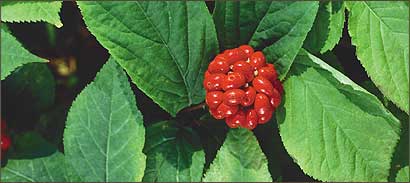
Ginseng berry, virtually an untapped treasure in the nutritional industry, contains potent antioxidants called ginsenosides.

Ginseng berry, virtually an untapped treasure in the nutritional industry, contains potent antioxidants called ginsenosides.

These nutrients enhance the body's natural defense system to aid against invading free radicals.

Ginseng berry growth is restricted to certain areas of the world due to climate and weather conditions, making it difficult to cultivate.

When this rare berry is picked, it is after a three- to four- year wait, and then the harvest must occur during a short, two-week period.

more information's at eexcel by www.dreddyclinic.com

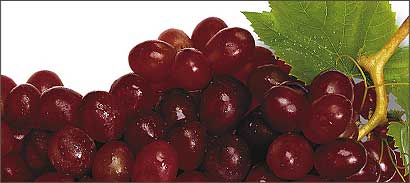
Grape Seed - A powerful antioxidant found in grape seed is oligomeric proanthocyanidin, better known as OPC.

A powerful antioxidant found in grape seed is oligomeric proanthocyanidin, better known as OPC.

Scientific studies have shown that OPC's antioxidant power is 20 times stronger than Vitamin C and 50 times stronger than vitamin E.

OPC is also thought to increase the effectiveness of other antioxidants by helping them regenerate after neutralizing free radicals.

Research results suggest that OPC protects cells from free radical damage and strengthens and repairs connective tissue—especially that of the cardiovascular system.

more info at eexcel by www.dreddyclinic.com and www.dereddy-clinic.com

For thousands of years, herbalists have turned to mushrooms to treat a variety of ailments

For thousands of years, herbalists have turned to mushrooms to treat a variety of ailments.

Today, much research has been focused on the link between the polysaccharides found in mushrooms and a healthy immune system.

Examples of such extraordinary mushrooms include reishi, which provides cardiovascular support; shiitake, which enhances the immune system's ability to defend against invaders; and maitake, the most potent immunostimulant of all mushrooms.

more information at eexcel by www.dreddyclinic.com

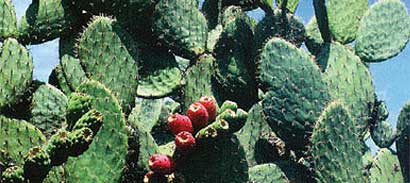
Intimidating and formidable, the cactus plant's thorny exterior guards a remarkable source of nutrition.

Intimidating and formidable, the cactus plant's thorny exterior guards a remarkable source of nutrition.

In addition to supporting a strong immune system, cactus can reduce inflammation, maintain healthy cholesterol and sugar levels, and enhance the body's overall health.

Though the thousands of phytochemicals in cactus were once nature's best-kept secret, scientists have recently uncovered a number of well-known nutrients. Cactus contains pectin, which contributes fiber, and carotenes and ascorbic acid, which strengthen antioxidant activity.

more info at eexcel by www.dreddyclinic.com

Wednesday, December 13, 2006

Asthma Death Rate Among Kids Down

(HealthDay News) -- Asthma deaths among American children have declined since 1999, but rates of doctor visits for asthma have more than doubled over the past decade, says a U.S. Centers for Disease Control and Prevention report released Tuesday.

In 2005, 9 percent of American children under age 18 (6.5 million) had asthma, compared to 3.6 percent in 1980 and 7.5 percent in 1995, said the report, State of Childhood Asthma, United States: 1980-2005.

Among the report's highlights:
  • Asthma death rates increased steadily between 1980 and 1998, but for the most part have declined since 1999, when asthma accounted for 3.2 deaths per one million children. In 2004, the rate was 2.5 deaths per one million.
  • In the early 1990s, asthma accounted for less than 40 doctor visits per 1,000 children. In 2004, the rate was 89 visits per 1,000 children.
  • Puerto Rican and non-Hispanic black children have the highest asthma rates, 19.2 percent and 12.7 percent, respectively.
  • Data from 2003 showed that children with at least one asthma attack in the previous year (nearly 4 million children) missed a cumulative total of 12.8 million school days due to asthma.
  • Rates of asthma-related emergency department visits for children remained fairly stable from 1992 (103 visits per 10,000 children) to 2004 (97.6 visits per 10,000 children).
  • An analysis of data from 37 states found that Massachusetts, Hawaii, Oklahoma, Maryland and Rhode Island had the highest rates of childhood asthma. Utah, California, Iowa, Tennessee and Washington had the lowest rates.


More information
The American Lung Association has more about childhood asthma.

Folic Acid Doesn't Help the Heart

(HealthDay News) -- If you're taking folic acid supplements to try to stave off a second heart attack or stroke, you'd probably get more benefit from making lifestyle changes, such as exercising more and eating right, new research suggests.

In an analysis of a dozen randomized, placebo-controlled clinical trials, researchers found that folic acid supplements do little to reduce cardiovascular disease risk in people who already have a history of heart disease, stroke or serious kidney disease.

"Consuming a supplement of folic acid is probably not going to mitigate your risk of cardiovascular disease," said the study's lead author, Dr. Lydia Bazzano, an assistant professor of epidemiology at Tulane University School of Public Health and Tropical Medicine, in New Orleans.

Results of Bazzano's analysis are published in the Dec. 13 issue of the Journal of the American Medical Association.

According to Dr. Stephen Siegel, a cardiologist at New York University Medical Center in New York City: "The whole concept [of folic acid supplementation] began because we know there's an association between homocysteine levels and atherosclerotic disease, and we know that we can safely lower homocysteine with folic acid. But we don't know if there's a cause-and-effect relationship between homocysteine and cardiovascular disease, or simply an association. Many doctors jumped on the bandwagon, however, because folic acid didn't have the potential to do any harm, but it looked like it might help."

"It was a great thought," Siegel said, but added, "Unfortunately, there's no easy magic bullet. This study cements the evidence presented by other studies that there doesn't seem to be any cardiovascular benefit from folic acid supplements."

For the new study, Bazzano and her colleagues reviewed published literature from 1966 through July 2006 to find studies that had been done comparing folic acid to the use of a placebo in people who had a history of cardiovascular disease.

The researchers found 12 studies that fit their criteria. Together, the studies included data from nearly 17,000 people who took either a placebo or a folic acid supplement for at least six months.

When looking at the studies combined, 18.3 percent of those taking folic acid experienced a cardiovascular event, compared to 19.2 percent of those on a placebo. For heart disease, the rates were 11.4 percent for people taking folic acid supplements, and 10.6 percent for those on a placebo. And 4.7 percent of those on folic acid had a stroke, compared to 5.8 percent of patients on a placebo.

One piece of good news from the study is that taking folic acid appeared to be safe, and it didn't increase the risk for mortality.

"This study provides very important info, and it shows that cardiovascular disease prevention is not as simple as taking a pill," said Dr. Julius Gardin, chief of cardiology at St. John Hospital and Medical Center in Detroit. "I don't know that the final answer on folic acid has been written yet, but this study suggests that folic acid supplementation is not effective for secondary prevention of cardiovascular disease," he added.

Bazzano was quick to point out, however, that this study doesn't mean people shouldn't get folic acid -- which in its natural form is known as folate -- from a healthful diet. Leafy green vegetables and citrus fruits are rich in folate and are important components in a healthy diet.

And, eating a healthy diet is a known way to prevent cardiovascular disease.

Other ways of reducing your risk include quitting smoking, lowering your blood pressure and cholesterol, and controlling diabetes, according to Bazzano.

Both Siegel and Gardin said exercise is very important in protecting your cardiovascular health, as well.

"Exercise is probably one of the most critical things that people can do. At a minimum, people should get 30 minutes of activity at least five days a week," said Siegel, who added that most people should also add 40 minutes to an hour of moderately strenuous activity into their routines another two or three times a week.

More information
The U.S. Food and Drug Administration offers advice on keeping your heart healthy.

Many at High Risk Don't Get Flu Shot

(HealthDay News) -- About half of American adults who are at high risk for flu and related complications don't know that they need to get a flu shot and therefore don't get one, according to a survey of 300 adults conducted in September 2004 and March 2005.

People at high risk include adults aged 65 and older and people ages 18 to 64 who have chronic health conditions. Another high priority group of adults are those who are in regular contact with high-risk adults or children.

Each year, flu-related illnesses kill about 36,000 people in the United States, according to the U.S. Centers for Disease Control and Prevention.

"We need to be clearer about who is in the high risk groups. If we can frame health messages around easily identifiable risk categories, then others -- including family and friends of high risk individuals -- can help persuade those at high risk to get their flu shot. This simple message could very well save lives," Dr. Noel T. Brewer, assistant professor of health behavior and health education at the University of North Carolina at Chapel Hill, said in a prepared statement.

Brewer and Dr. William K. Hallman, professor of human ecology at Rutgers University, led the study.

Half of the survey respondents who met CDC criteria for being at high risk said they believed their risk was low and did not get a flu shot.

Overall, more than 60 percent of elderly respondents did get a flu shot, compared with 26 percent of younger adults at high risk and 36 percent of people who had regular contact with adults at high risk. Only a few people overestimated their flu risk.

The study was published in the Dec. 1 issue of the journal Clinical Infectious Diseases.

More information
The U.S. Centers for Disease Control and Prevention offers advice on how to prevent flu.

Health Tip: Using Hand Sanitizers

(HealthDay News) -- While the best way to prevent the spread of germs is still good old-fashioned soap and water, antibacterial hand sanitizers are an easy way to practice good hygiene when there's no sink nearby.

For best use of the product, follow its directions carefully, says the Health Services Department at Great Basin College. Apply the product liberally to your entire hand -- front and back -- and rub your hands together until the solution has dried.

If you can see dirt on your hands, however, you should still wash with soap and water, the department says.

Monday, December 04, 2006

Health Tip: Who Needs Aspirin?

(HealthDay News) -- Aspirin is often recommended by cardiologists for its blood-thinning properties, but the medication can lead to complications, including stomach problems.

The Cleveland Clinic says you should always check with your doctor before starting a daily aspirin regimen.

In general, the clinic says, people at risk for the following conditions may benefit from aspirin therapy:
  • Heart attack.
  • Blood clots or stroke caused by blood clots.
  • Unstable angina.
  • Transient ischemic attacks (TIAs) or "mini-strokes."

Weight Loss Ebook - Secrets Revealed - Revised Edition

Weight Loss Ebook - Secrets Revealed - Revised Edition

$19.95
[ learn more ]

Add to Cart

This is not only a weight loss program, it is also a plan for "TOTAL HEALTH". If you want a quick fix (taking metabolism boosters, etc.), only to gain more weight when you stop, do not even consider this program. Our program is designed to change the way you think and live your life. Change is only a decision away. You can do this! If you are motivated, and truly care about taking care of your body, and you are willing to make changes in your life, then this program is for you! - E-Book Version.(WL)