Choosing between tamoxifen, the standard therapy, and one of the newer aromatase inhibitors still remains somewhat tricky. On the one hand, there is no question that the likelihood of events is reduced when you take one of these new drugs over the short run. The big question is what do they do to bone density because aromatase inhibitors significantly lower estrogen, and that decreases bone density.
On the other hand, tamoxifen has some fairly well-described short-term side effects like an increased risk of uterine cancer and aside from that, an increased risk of vaginal complaints like bleeding or discharge. And these things seem to be less of an issue with the aromatase inhibitors. There is also an increased risk of blood clots with tamoxifen, and maybe stroke and even heart attacks. So we have to consider all these issues carefully. Obviously a woman, for example, who has had her uterus removed, has taken away one of the concerns with tamoxifen.
We simply don't know what the very best strategy is, so I think we have to say that doctors and their patients will have to individualize treatment.
Saturday, October 28, 2006


How much risk reduction is associated with hormone therapy?
Tamoxifen given for five years to women with hormone-responsive breast cancer lowers the risk of recurrence by 40 percent per year, and the overall benefit will be close to a one-third reduction in risk. There is no consistent evidence of benefit with tamoxifen beyond five years. In addition, the risk of developing uterine cancer increases with more exposure, so after five years you get no additional benefit, but you keep adding risk.
The last few years have given us new options in adjuvant hormone therapy for postmenopausal women. It now looks increasingly like substituting or switching to or following that tamoxifen with an aromatase inhibitor further improves outcome.
We have three large randomized trials as of May of 2004, all of which show the same thing: The risk of a recurrence of breast cancer in the breast or a recurrence of breast cancer outside the breast is more greatly reduced when a woman is on a aromatase inhibitor compared to tamoxifen.
The last few years have given us new options in adjuvant hormone therapy for postmenopausal women. It now looks increasingly like substituting or switching to or following that tamoxifen with an aromatase inhibitor further improves outcome.
We have three large randomized trials as of May of 2004, all of which show the same thing: The risk of a recurrence of breast cancer in the breast or a recurrence of breast cancer outside the breast is more greatly reduced when a woman is on a aromatase inhibitor compared to tamoxifen.
What are the hormone therapy choices?
If a breast cancer has estrogen and progesterone receptors, which means that these hormones may fuel the growth of these cancers, the treatment options are broader.
Tamoxifen, of course, is the gold standard, and this drug is given to women with hormone-responsive breast cancer. It attaches to the estrogen receptor and deprives the cancer of a needed hormone.
It thereby starves the cancer cell of a needed nutrient, if you will. The aromatase inhibitors do this by shutting off the residual production of estrogen at sites outside the ovaries. But they're in a sense doing the same thing as tamoxifen.
Tamoxifen, of course, is the gold standard, and this drug is given to women with hormone-responsive breast cancer. It attaches to the estrogen receptor and deprives the cancer of a needed hormone.
It thereby starves the cancer cell of a needed nutrient, if you will. The aromatase inhibitors do this by shutting off the residual production of estrogen at sites outside the ovaries. But they're in a sense doing the same thing as tamoxifen.
How do you balance the benefits of chemotherapy with the side effects?
People are very worried about the side effects of chemotherapy. In fact, often they're more focused on the side effects than the potential benefits. The side effects traditionally included hair loss, nausea and vomiting, risk of infection, fatigue.
But the last 10 years have been exciting, not only because of better therapies, but also because of better ways of treating the side effects and supporting people through their therapy. We have much better anti-nausea medicines, for example, so vomiting has now become relatively rare. One of the things we still struggle with is fatigue. We don't have a direct way to deal with the fatigue that's common with chemotherapy. And we don't have a way to deal with the hair loss that occurs.
Then there are the life-threatening side effects that are long term, such as leukemia or heart failure. They are, thankfully, very rare. They are in many cases associated with specific drugs, and we may reserve the use of those drugs for very high-risk situations where the benefits of therapy dramatically outweigh those risks.
In the last few years, we've developed chemotherapy regimens that have fewer of these side effects and are, in many cases, shorter than traditional therapy, so the duration of these side effects can be shortened, as well.
But the last 10 years have been exciting, not only because of better therapies, but also because of better ways of treating the side effects and supporting people through their therapy. We have much better anti-nausea medicines, for example, so vomiting has now become relatively rare. One of the things we still struggle with is fatigue. We don't have a direct way to deal with the fatigue that's common with chemotherapy. And we don't have a way to deal with the hair loss that occurs.
Then there are the life-threatening side effects that are long term, such as leukemia or heart failure. They are, thankfully, very rare. They are in many cases associated with specific drugs, and we may reserve the use of those drugs for very high-risk situations where the benefits of therapy dramatically outweigh those risks.
In the last few years, we've developed chemotherapy regimens that have fewer of these side effects and are, in many cases, shorter than traditional therapy, so the duration of these side effects can be shortened, as well.
Sunday, October 22, 2006
Vitamin Shows Promise for MS Patients
(HealthDay News) -- Multiple sclerosis patients may benefit from a form of vitamin B3, a new study finds.
Multiple sclerosis (MS) results in damage to nerve fibers, causing fatigue, difficulty walking, pain and other problems. Most people with MS eventually enter a chronic progressive phase of the disease for which there is currently no good treatment.
New research published in the Sept. 20 issue of the Journal of Neuroscience studied the effects of injecting nicotinamide -- a form of vitamin B3 -- under the skin of mice that had an MS-like disease.
The researchers, from the Neurobiology Program in Children's Hospital Boston, found the injections protected nerve fibers in the mice from degeneration -- even in the nerve cells that had already been damaged.
The higher the dose of nicotinamide, the more protective the effect, the study found.
On a scale of one to five, with one indicating the least nerve damage and five indicating the most, the mice receiving the highest doses of nicotinamide had neurologic scores of one to two, and those receiving no nicotinamide had scores between three and four.
Even the mice in which treatment was delayed until 10 days after the onset of their disease benefited.
"The earlier therapy was started, the better the effect, but we hope nicotinamide can help patients who are already in the chronic state," Shinjiro Kaneko, a research fellow at Children's, said in a prepared statement.
Researchers believe nicotinamide works by increasing the levels of a compound known as nicotinamide adenine dinucleotide (NAD), which has been shown to directly prevent nerve degeneration.
More information
The National Institute of Neurological Disorders and Stroke has more about multiple sclerosis.
Multiple sclerosis (MS) results in damage to nerve fibers, causing fatigue, difficulty walking, pain and other problems. Most people with MS eventually enter a chronic progressive phase of the disease for which there is currently no good treatment.
New research published in the Sept. 20 issue of the Journal of Neuroscience studied the effects of injecting nicotinamide -- a form of vitamin B3 -- under the skin of mice that had an MS-like disease.
The researchers, from the Neurobiology Program in Children's Hospital Boston, found the injections protected nerve fibers in the mice from degeneration -- even in the nerve cells that had already been damaged.
The higher the dose of nicotinamide, the more protective the effect, the study found.
On a scale of one to five, with one indicating the least nerve damage and five indicating the most, the mice receiving the highest doses of nicotinamide had neurologic scores of one to two, and those receiving no nicotinamide had scores between three and four.
Even the mice in which treatment was delayed until 10 days after the onset of their disease benefited.
"The earlier therapy was started, the better the effect, but we hope nicotinamide can help patients who are already in the chronic state," Shinjiro Kaneko, a research fellow at Children's, said in a prepared statement.
Researchers believe nicotinamide works by increasing the levels of a compound known as nicotinamide adenine dinucleotide (NAD), which has been shown to directly prevent nerve degeneration.
More information
The National Institute of Neurological Disorders and Stroke has more about multiple sclerosis.
Vitamin D Compound May Fight Blood Clots in Cancer Patients
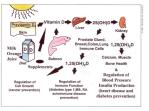 (HealthDay News) -- Calcitriol, the activated form of vitamin D, helped reduce bloods clots in cancer patients, U.S. researchers report.
The study, conducted by a team from the Oregon Health & Science University (OHSU) Cancer Institute in Portland, included 250 patients with advanced prostate cancer.
According to the researchers, patients who received high-dose calcitriol (DN-101) along with the chemotherapy drug Docetaxel had significantly fewer venous and arterial blood clots than patients who received a placebo and Docetaxel.
The findings were published online in the British Journal of Haematology and were expected to be in the November print issue of the journal.
"Blood clots, including life-threatening events such as stroke, heart attacks, and clots in the lungs are serious complications of advanced cancer and cancer chemotherapy. Reducing such blood clots would make a big difference for cancer patients," principal investigator Dr. Tomasz M. Beer, director of the prostate cancer program at the OHSU Cancer Institute, said in a prepared statement.
More research is needed in order to confirm whether high-dose calcitriol (DN-101) does reduce blood clots in cancer patients.
DN-101 is made by Novacea Inc. Both OHSU and Beer have significant financial interest in Novacea.
More information
The U.S. Food and Drug Administration offers tips on preventing blood clots in the legs during long trips.
Study Suggests Vitamin D May Help Fight Breast Cancer
 (HealthDay News) -- Women with early stage breast cancer have significantly higher levels of vitamin D in their blood than women with cancer that has spread to other parts of the body, a small study found.
This could mean that a lack of vitamin D somehow plays a role in the spread of the disease. However, it's way too early to make specific recommendations based on the findings, experts say.
"It's an interesting concept but it's a small study and needs to be done in a large, randomized, controlled fashion," said Dr. Jay Brooks, chairman of hematology/oncology at Ochsner Health System in Baton Rouge, La.
"There are no real practical implications as such yet, from a lifestyle point of view, all women (and men) should eat a balanced diet and ensure they are exposed to some sunlight, as this is important in vitamin D synthesis," added the study's lead author, Dr. Carlo Palmieri, of Cancer Research UK Laboratories and Imperial College, London.
Previous research has hinted at a role for vitamin D in cancer prevention. In laboratory studies, vitamin D stopped cancer cells from dividing and also contributed to cell death. And epidemiological reviews suggest that breast cancer incidence and mortality is lower in latitudes with more sunlight.
Sunlight is critical for health because it allows the skin to synthesize vitamin D. Another recent study found that vitamin D may lower the risk of breast and ovarian cancer. Vitamin D is also known to enhance the function of certain genes -- including p21, which is involved in the cell life cycle -- while inhibiting the function of others.
For the new study, published online Monday in the Journal of Clinical Pathology, the researchers measured vitamin D levels, parathyroid hormone and calcium in 204 women with early breast cancer; 279 women with invasive breast cancer; and 75 women with advanced breast cancer. All participants were Caucasian.
Women with early stage breast cancer had higher levels of vitamin D and lower levels of parathyroid hormone than women with advanced disease. Calcium levels were similar.
The exact reason for the disparities isn't clear, the study authors stated. Nor is it clear that there's a cause-and-effect relationship between the presence of vitamin D and cancer prognosis.
"Our study showed an association," Palmieri said. "In other words, women with advanced breast cancer had lower vitamin D, and the question is whether this is cause or effect."
Still, Palmieri said, the findings should be viewed in the context of all the other available data on vitamin D -- data that seem to support the hypothesis that vitamin D is somehow involved in breast cancer.
"Our data lends weight to the hypothesis that vitamin D has a role in the pathogenesis and progression of breast cancer," he said.
One next step for researchers, Palmieri said, would be to see if maintaining normal levels of vitamin D -- by taking supplements -- in women diagnosed with early or advanced breast cancer improved their outcomes, when used in conjunction with the latest therapies.
More information
Visit the National Cancer Institute for more on breast cancer.
Fish and Fish Oil's Benefits Far Outweigh Risks
(HealthDay News) -- Americans looking for safe, healthy eating should focus first on fish, according to two government-funded reviews that weighed the pros and cons of eating the finned food.
The verdict: "Fish is likely the single most important food to eat for health, based on the evidence," said the co-author of one of the studies, Dr. Dariush Mozaffarian, an instructor in the department of epidemiology at the Harvard School of Public Health.
That study was funded by the U.S. National Heart, Lung, and Blood Institute, and is published in the Oct. 18 issue of the Journal of the American Medical Association.
Mozaffarian said that while a few species do contain worrisome levels of mercury and other contaminants, "when both risks and benefits are considered for the general population, the benefits of fish intake far outweigh the possible risks."
The second major analysis, funded by the Institute of Medicine (IOM), found similar results based on a review of the literature. The IOM panelists agreed that while certain long-lived species may pose a mercury risk to women and young children, fish on the whole is good for Americans. Those results, contained in a report titled Seafood Choices: Balancing Benefits and Risks, were announced at a Washington, D.C., news conference on Tuesday.
"Both studies come out with the same conclusion -- seafood is safe and nutritious and Americans should incorporate a variety of seafood in their diets to reduce risk of death from heart disease. In fact, there's a bigger health risk associated with not eating seafood among adults due to coronary heart disease, the primary cause of death among Americans," William T. Hogarth, director of National Marine Fisheries Service, said during the news conference.
One nutrition expert agreed with the findings, especially when it comes to the omega-3 fatty acids found in oily fish such as mackerel, salmon and sardines.
"Omega-3s are, right now, the superstars of the nutrition world," said Katherine Tallmadge, a Washington, D.C., nutritionist who's a spokeswoman for the American Dietetic Association. "There's no question about it -- this is a really critical nutrient that we need, and hardly any Americans are getting enough."
By now, most Americans have heard of the health benefits of omega-3 fatty acids, which are found in greatest abundance in oily, cold-water fish such as herring, mackerel, sardines, salmon and anchovies. There are two main omega-3s -- eicosapentaenoic acid (EPA) and docosahexaenoic acid (DHA).
Among other benefits, these compounds are thought to aid in fetal, infant and child neurological development and also protect adults against cholesterol and heart disease.
But oily fish have a darker side. Industrial toxins can make their way into the water supply and end up in concentrated form in the flesh of these fish. Methylmercury, especially, has been linked to developmental problems in newborns and heart, nervous system and kidney damage in adults. For this reason, the U.S. Environmental Protection Agency and the U.S. Food and Drug Administration have each issued warnings about the consumption of a few -- but certainly not all -- fish species by women of childbearing age.
So, is regular fish consumption still good for most people? To find out, Mozaffarian and co-researcher Eric Rimm pored over dozens of studies on the subject conducted up to the spring of this year.
They found that the benefits of fish for heart health far outweighed any risks for the vast majority of consumers. For example, even modest consumption of fish -- one to two servings a week -- cut the overall death risk by 17 percent and deaths from coronary causes by 36 percent, especially if those fish were of the more oily varieties.
Even 250 grams a day of omega-3 fatty acids, considered a relatively low level, were sufficient to start protecting the heart, the researchers said. Ideally, this level of intake could come from just one 6-ounce serving a week of wild salmon or other oily fish. Alternatively, it could come in the form of a fish-oil supplement, the researchers said.
The IOM report agreed with those findings. The agency said it is not yet clear whether the cardiac benefits of fish stem from omega-3 fatty acids, or whether people are simply "substituting the lean protein of seafood for fatty cuts of meat" in their diet.
Caveats remain, however. The Harvard team said that, due to high mercury content, pregnant women or women who believe they could become pregnant are still advised to avoid four fish species: King mackerel (not Atlantic mackerel); shark; swordfish; and golden bass (also known as tilefish). The IOM said another species, white albacore tuna, should only be consumed in amounts under 6 ounces per week.
Because omega-3s are so beneficial for the developing fetus, pregnant women are strongly encouraged to eat all other fish species, Mozaffarian said.
In its recommendations, the IOM panel also suggested that pregnant women and children under 12 years of age consume up to 12 ounces per week of all seafood species except shark, swordfish, tilefish or king mackerel. They especially recommended those species rich in omega-3 fatty acids.
The IOM report did have its critics, however. One consumer advocacy group questioned the IOM's decision to lump small children in with pregnant women as it drew up its recommendations. "They seem to be unaware that children are smaller than adults," Jean Halloran, director of food safety at Consumers Union, told the Associated Press. "That advice, which they featured prominently, could result in young children getting excessive doses of mercury."
Mozaffarian also noted that not all fish dishes are created equal.
"The average fried fish in the U.S. -- a commercially prepared, fried-fish meal -- does not have significant cardiovascular benefit, and may even harm you," he said. The unhealthy oils used in deep-frying appear to cancel out any benefits from the fish, which, in any case, are usually non-fatty species such as cod.
Tallmadge agreed, adding that "canned salmon is probably a nice economical choice," however. "It's usually [caught] wild. The wild salmon is leaner and has proportionally higher levels of omega-3s than farm-bred varieties," she said.
The American Heart Association currently recommends that heart patients take in 1,000 milligrams of omega-3s daily, and healthy individuals consume between 500 and 1,000 milligrams a day. For comparison purposes, Tallmadge noted that a typical 3.5 ounce serving of sardines in sardine oil contains about 3,300 milligrams of omega-3 fatty acids; a similar serving of Atlantic mackerel has 2,500 milligrams; Atlantic herring has 1,600 milligrams; Atlantic salmon, 1,200 milligrams; brook trout, 500 milligrams; and shrimp or flounder, 300 milligrams.
And what about fish-oil supplements? According to Tallmadge, the labeling on many popular supplements can be misleading.
"On the front of the bottle, they'll announce, '1,200 milligrams' of fish oil," she said, "but then when you read the fine print on the back, what's important to look for is the amount of EPA and DHA." Often, that amounts to just 20 or so percent of the pills' volume.
Tallmadge tells her clients to go for an FDA-regulated, prescription omega-3 pill, Omacor (900 milligrams per pill). Then, at least, they know what they're paying for, she said.
More information
There's more on omega-3 fatty acids at the American Heart Association.
The verdict: "Fish is likely the single most important food to eat for health, based on the evidence," said the co-author of one of the studies, Dr. Dariush Mozaffarian, an instructor in the department of epidemiology at the Harvard School of Public Health.
That study was funded by the U.S. National Heart, Lung, and Blood Institute, and is published in the Oct. 18 issue of the Journal of the American Medical Association.
Mozaffarian said that while a few species do contain worrisome levels of mercury and other contaminants, "when both risks and benefits are considered for the general population, the benefits of fish intake far outweigh the possible risks."
The second major analysis, funded by the Institute of Medicine (IOM), found similar results based on a review of the literature. The IOM panelists agreed that while certain long-lived species may pose a mercury risk to women and young children, fish on the whole is good for Americans. Those results, contained in a report titled Seafood Choices: Balancing Benefits and Risks, were announced at a Washington, D.C., news conference on Tuesday.
"Both studies come out with the same conclusion -- seafood is safe and nutritious and Americans should incorporate a variety of seafood in their diets to reduce risk of death from heart disease. In fact, there's a bigger health risk associated with not eating seafood among adults due to coronary heart disease, the primary cause of death among Americans," William T. Hogarth, director of National Marine Fisheries Service, said during the news conference.
One nutrition expert agreed with the findings, especially when it comes to the omega-3 fatty acids found in oily fish such as mackerel, salmon and sardines.
"Omega-3s are, right now, the superstars of the nutrition world," said Katherine Tallmadge, a Washington, D.C., nutritionist who's a spokeswoman for the American Dietetic Association. "There's no question about it -- this is a really critical nutrient that we need, and hardly any Americans are getting enough."
By now, most Americans have heard of the health benefits of omega-3 fatty acids, which are found in greatest abundance in oily, cold-water fish such as herring, mackerel, sardines, salmon and anchovies. There are two main omega-3s -- eicosapentaenoic acid (EPA) and docosahexaenoic acid (DHA).
Among other benefits, these compounds are thought to aid in fetal, infant and child neurological development and also protect adults against cholesterol and heart disease.
But oily fish have a darker side. Industrial toxins can make their way into the water supply and end up in concentrated form in the flesh of these fish. Methylmercury, especially, has been linked to developmental problems in newborns and heart, nervous system and kidney damage in adults. For this reason, the U.S. Environmental Protection Agency and the U.S. Food and Drug Administration have each issued warnings about the consumption of a few -- but certainly not all -- fish species by women of childbearing age.
So, is regular fish consumption still good for most people? To find out, Mozaffarian and co-researcher Eric Rimm pored over dozens of studies on the subject conducted up to the spring of this year.
They found that the benefits of fish for heart health far outweighed any risks for the vast majority of consumers. For example, even modest consumption of fish -- one to two servings a week -- cut the overall death risk by 17 percent and deaths from coronary causes by 36 percent, especially if those fish were of the more oily varieties.
Even 250 grams a day of omega-3 fatty acids, considered a relatively low level, were sufficient to start protecting the heart, the researchers said. Ideally, this level of intake could come from just one 6-ounce serving a week of wild salmon or other oily fish. Alternatively, it could come in the form of a fish-oil supplement, the researchers said.
The IOM report agreed with those findings. The agency said it is not yet clear whether the cardiac benefits of fish stem from omega-3 fatty acids, or whether people are simply "substituting the lean protein of seafood for fatty cuts of meat" in their diet.
Caveats remain, however. The Harvard team said that, due to high mercury content, pregnant women or women who believe they could become pregnant are still advised to avoid four fish species: King mackerel (not Atlantic mackerel); shark; swordfish; and golden bass (also known as tilefish). The IOM said another species, white albacore tuna, should only be consumed in amounts under 6 ounces per week.
Because omega-3s are so beneficial for the developing fetus, pregnant women are strongly encouraged to eat all other fish species, Mozaffarian said.
In its recommendations, the IOM panel also suggested that pregnant women and children under 12 years of age consume up to 12 ounces per week of all seafood species except shark, swordfish, tilefish or king mackerel. They especially recommended those species rich in omega-3 fatty acids.
The IOM report did have its critics, however. One consumer advocacy group questioned the IOM's decision to lump small children in with pregnant women as it drew up its recommendations. "They seem to be unaware that children are smaller than adults," Jean Halloran, director of food safety at Consumers Union, told the Associated Press. "That advice, which they featured prominently, could result in young children getting excessive doses of mercury."
Mozaffarian also noted that not all fish dishes are created equal.
"The average fried fish in the U.S. -- a commercially prepared, fried-fish meal -- does not have significant cardiovascular benefit, and may even harm you," he said. The unhealthy oils used in deep-frying appear to cancel out any benefits from the fish, which, in any case, are usually non-fatty species such as cod.
Tallmadge agreed, adding that "canned salmon is probably a nice economical choice," however. "It's usually [caught] wild. The wild salmon is leaner and has proportionally higher levels of omega-3s than farm-bred varieties," she said.
The American Heart Association currently recommends that heart patients take in 1,000 milligrams of omega-3s daily, and healthy individuals consume between 500 and 1,000 milligrams a day. For comparison purposes, Tallmadge noted that a typical 3.5 ounce serving of sardines in sardine oil contains about 3,300 milligrams of omega-3 fatty acids; a similar serving of Atlantic mackerel has 2,500 milligrams; Atlantic herring has 1,600 milligrams; Atlantic salmon, 1,200 milligrams; brook trout, 500 milligrams; and shrimp or flounder, 300 milligrams.
And what about fish-oil supplements? According to Tallmadge, the labeling on many popular supplements can be misleading.
"On the front of the bottle, they'll announce, '1,200 milligrams' of fish oil," she said, "but then when you read the fine print on the back, what's important to look for is the amount of EPA and DHA." Often, that amounts to just 20 or so percent of the pills' volume.
Tallmadge tells her clients to go for an FDA-regulated, prescription omega-3 pill, Omacor (900 milligrams per pill). Then, at least, they know what they're paying for, she said.
More information
There's more on omega-3 fatty acids at the American Heart Association.
Thursday, October 19, 2006
Turmeric for Breast Cancer Prevention?
Turmeric for Breast Cancer Prevention?
Is it true that turmeric can prevent breast cancer? What can you tell me about this?
Turmeric (Curcuma longa) is the yellow spice most familiar in Indian curries and found in American prepared mustard. People whose diets are rich in turmeric have lower rates of breast cancer as well as prostate, lung and colon cancers, and recent research at the M.D. Anderson Cancer Center in Houston suggests that curcumin, an active component in turmeric, may help prevent the spread of breast cancer. In studies of mice, researchers found that curcumin helped stop the metastasis of breast cancer cells to the lung. Human studies following up on this finding are now in progress.
In the M.D. Anderson study, researchers injected mice with breast cancer cells from a woman whose disease had spread to her lungs. The cells began to grow in the mice and then were surgically removed. The mice then were divided into four groups: one got no treatment, one got curcumin, one got the cancer drug Taxol and the fourth group got curcumin plus Taxol. Cancer spread to the lungs among half the mice in the curcumin-only group and 22 percent of those in the curcumin/Taxol group. The other groups fared far worse: among the mice that received Taxol alone 75 percent developed lung tumors; and the cancer spread to the lungs among 95 percent of the mice who were given no treatment.
While these results are exciting, we don't know yet if curcumin plus Taxol will be as effective in humans. However, the researchers were impressed enough to suggest that it might be worthwhile to give curcumin to women at high risk of breast cancer because of a family history of the disease.
My preference is for whole turmeric rather than isolated curcumin, because I believe in the synergy of all active elements in botanical medicines. I wish researchers would get off the reductionistic bandwagon and come around to appreciate the inherent complexity of nature. Whole turmeric extracts are the way to go; I always recommend them to patients rather than products containing isolated curcumin.
Turmeric is useful for all inflammatory disorders and for autoimmune conditions. It also may have a role in the prevention and treatment of Alzheimer's disease. (Elderly villagers in India appear to have the lowest rate of Alzheimer's in the world, perhaps due to the fact that Indians eat turmeric with almost every meal. Some animal studies have shown that curcumin blocked the formation and accumulation of the plaque that characterizes Alzheimer's.)
Overall, turmeric appears to have significant anti-inflammatory and cancer-protective effects. These seem most evident at doses well below pharmaceutical strength, which suggests that it would be wise to consume more foods spiced with turmeric. But getting enough in food is not easy for Westerners. We are not familiar with using it, and large amounts taste bitter. Other than supplements, the best way I've found to consume turmeric is in the form of a cold, unsweetened tea. This is a popular beverage in Okinawa, the island culture famed for health and longevity. Convenient, tasty, instant forms of turmeric tea are easy to get there. I'm working to make them available through this Web site. Stay tuned.
Andrew Weil, M.D.
Is it true that turmeric can prevent breast cancer? What can you tell me about this?
Turmeric (Curcuma longa) is the yellow spice most familiar in Indian curries and found in American prepared mustard. People whose diets are rich in turmeric have lower rates of breast cancer as well as prostate, lung and colon cancers, and recent research at the M.D. Anderson Cancer Center in Houston suggests that curcumin, an active component in turmeric, may help prevent the spread of breast cancer. In studies of mice, researchers found that curcumin helped stop the metastasis of breast cancer cells to the lung. Human studies following up on this finding are now in progress.
In the M.D. Anderson study, researchers injected mice with breast cancer cells from a woman whose disease had spread to her lungs. The cells began to grow in the mice and then were surgically removed. The mice then were divided into four groups: one got no treatment, one got curcumin, one got the cancer drug Taxol and the fourth group got curcumin plus Taxol. Cancer spread to the lungs among half the mice in the curcumin-only group and 22 percent of those in the curcumin/Taxol group. The other groups fared far worse: among the mice that received Taxol alone 75 percent developed lung tumors; and the cancer spread to the lungs among 95 percent of the mice who were given no treatment.
While these results are exciting, we don't know yet if curcumin plus Taxol will be as effective in humans. However, the researchers were impressed enough to suggest that it might be worthwhile to give curcumin to women at high risk of breast cancer because of a family history of the disease.
My preference is for whole turmeric rather than isolated curcumin, because I believe in the synergy of all active elements in botanical medicines. I wish researchers would get off the reductionistic bandwagon and come around to appreciate the inherent complexity of nature. Whole turmeric extracts are the way to go; I always recommend them to patients rather than products containing isolated curcumin.
Turmeric is useful for all inflammatory disorders and for autoimmune conditions. It also may have a role in the prevention and treatment of Alzheimer's disease. (Elderly villagers in India appear to have the lowest rate of Alzheimer's in the world, perhaps due to the fact that Indians eat turmeric with almost every meal. Some animal studies have shown that curcumin blocked the formation and accumulation of the plaque that characterizes Alzheimer's.)
Overall, turmeric appears to have significant anti-inflammatory and cancer-protective effects. These seem most evident at doses well below pharmaceutical strength, which suggests that it would be wise to consume more foods spiced with turmeric. But getting enough in food is not easy for Westerners. We are not familiar with using it, and large amounts taste bitter. Other than supplements, the best way I've found to consume turmeric is in the form of a cold, unsweetened tea. This is a popular beverage in Okinawa, the island culture famed for health and longevity. Convenient, tasty, instant forms of turmeric tea are easy to get there. I'm working to make them available through this Web site. Stay tuned.
Andrew Weil, M.D.
Battling Broccoli?
Battling Broccoli?
I like broccoli, but, to be frank, it gives me gas, as do related foods such as cauliflower and Brussels sprouts. I know that I"m missing out on important nutrients by avoiding these foods. Is there a way I can eat these vegetables without getting gas?
Broccoli and other cruciferous vegetables including cauliflower, Brussels sprouts, cabbage, turnip greens and kale are rich in antioxidants, which help protect against both cancer and heart disease.
Population studies have shown that people who eat a lot of broccoli and other cruciferous vegetables have lower rates of cancer than those who don't. We don't know what constituents of broccoli and other crucifers are responsible for these protective effects. It may be a compound that occurs naturally in broccoli and cabbage, indole-3 carbinol (I-3-C), or the carotenoid pigments these vegetables contain.
Other possibilities include vitamin C or sulforaphane, a compound thought to increase production of an anti-tumor enzyme that is most concentrated in three-day-old broccoli sprouts. Most likely, the cancer-protective effects of broccoli and its relatives result from a synergistic interaction of these and other components of the vegetables.
Despite their healthy profile, some high-fiber cruciferous vegetables have bad reputations as gas producers due to their content of an indigestible sugar called raffinose (Larger amounts of raffinose are found in beans, which are notorious for inducing flatulence). Methane-producing bacteria in the colon feed on raffinose and release gas in the process.
There's nothing you can do to broccoli and other crucifers to cut down on the gas they induce. Extra cooking just makes them unpalatable and destroys vitamin content (incidentally, cooking broccoli in aluminum or copper pots also destroys vitamins and ruins flavor).
The extent to which your body produces gas depends on the types of bacteria in your colon that break down foods for digestion - we all are born with unique assortments of gut flora.
Broccoli and the other vegetables you mention are so good for you that it's worth making an effort to minimize their gas-producing effects so you can enjoy their health benefits.
You can try eating yogurt, kefir, or buttermilk regularly, to boost the friendly bacteria in your colon. Taking probiotic supplements, like lactobacillus GG, might be an even better way to do this. Lemon juice with meals can also be helpful.
And limiting high-fat foods can reduce bloating and discomfort and help the stomach to empty faster, allowing gases to move more readily into the small intestine. You can also try taking Beano before eating your broccoli. Available at health food stores, it is made from a plant-derived enzyme that breaks down raffinose before it enters the colon, thus reducing gas production.
In addition, you might experiment by eating very small amounts of broccoli every day, gradually increasing your intake to see if you can build up tolerance to it. Finally, fennel seeds can help expel gas from the digestive tract - try chewing and swallowing a half teaspoon at the end of a meal. Indian grocery stores sell sugarcoated fennel seeds as digestive aids.
Andrew Weil, M.D.
I like broccoli, but, to be frank, it gives me gas, as do related foods such as cauliflower and Brussels sprouts. I know that I"m missing out on important nutrients by avoiding these foods. Is there a way I can eat these vegetables without getting gas?
Broccoli and other cruciferous vegetables including cauliflower, Brussels sprouts, cabbage, turnip greens and kale are rich in antioxidants, which help protect against both cancer and heart disease.
Population studies have shown that people who eat a lot of broccoli and other cruciferous vegetables have lower rates of cancer than those who don't. We don't know what constituents of broccoli and other crucifers are responsible for these protective effects. It may be a compound that occurs naturally in broccoli and cabbage, indole-3 carbinol (I-3-C), or the carotenoid pigments these vegetables contain.
Other possibilities include vitamin C or sulforaphane, a compound thought to increase production of an anti-tumor enzyme that is most concentrated in three-day-old broccoli sprouts. Most likely, the cancer-protective effects of broccoli and its relatives result from a synergistic interaction of these and other components of the vegetables.
Despite their healthy profile, some high-fiber cruciferous vegetables have bad reputations as gas producers due to their content of an indigestible sugar called raffinose (Larger amounts of raffinose are found in beans, which are notorious for inducing flatulence). Methane-producing bacteria in the colon feed on raffinose and release gas in the process.
There's nothing you can do to broccoli and other crucifers to cut down on the gas they induce. Extra cooking just makes them unpalatable and destroys vitamin content (incidentally, cooking broccoli in aluminum or copper pots also destroys vitamins and ruins flavor).
The extent to which your body produces gas depends on the types of bacteria in your colon that break down foods for digestion - we all are born with unique assortments of gut flora.
Broccoli and the other vegetables you mention are so good for you that it's worth making an effort to minimize their gas-producing effects so you can enjoy their health benefits.
You can try eating yogurt, kefir, or buttermilk regularly, to boost the friendly bacteria in your colon. Taking probiotic supplements, like lactobacillus GG, might be an even better way to do this. Lemon juice with meals can also be helpful.
And limiting high-fat foods can reduce bloating and discomfort and help the stomach to empty faster, allowing gases to move more readily into the small intestine. You can also try taking Beano before eating your broccoli. Available at health food stores, it is made from a plant-derived enzyme that breaks down raffinose before it enters the colon, thus reducing gas production.
In addition, you might experiment by eating very small amounts of broccoli every day, gradually increasing your intake to see if you can build up tolerance to it. Finally, fennel seeds can help expel gas from the digestive tract - try chewing and swallowing a half teaspoon at the end of a meal. Indian grocery stores sell sugarcoated fennel seeds as digestive aids.
Andrew Weil, M.D.
Believing Cancer Myths?
Believing Cancer Myths?
I have been told that the smell of burnt coffee means you have cancer. I've also heard other cancer myths. Can you debunk some common ones?
I've never heard the one about burnt coffee and haven't been able to track it down. But there are plenty of other cancer myths in circulation:
I have been told that the smell of burnt coffee means you have cancer. I've also heard other cancer myths. Can you debunk some common ones?
I've never heard the one about burnt coffee and haven't been able to track it down. But there are plenty of other cancer myths in circulation:
- Cancer spreads when exposed to air during surgery: This is the most widely believed cancer myth, according to a 2005 survey by the American Cancer Society (ACS). Nearly 41 percent of respondents to a telephone survey of 957 adults in the United States said that they believed that cancer can spread throughout the body during surgery. In fact, cancer does not spread during surgery, which can be highly effective treatment for many malignancies. The ACS study was published in the June 27, 2005 online issue of the journal Cancer.
- The medical industry is withholding a cure for cancer because there's too much money in treating patients: More than 27 percent of the survey respondents held this view and another 14 percent weren't sure. This conspiracy theory is nonsense. First of all, cancer is not one disease but many. It is unlikely that any single "cure" would work for all of them. Besides there has been impressive progress. The ACS notes that only a few decades ago fewer than one in 10 children with leukemia survived 10 yeas after diagnosis. Today's treatment has raised the cure rate to almost 80 percent. Similar advances have been made in curing Hodgkin's lymphoma, bone and kidney cancers in children, and testicular cancer. Just ask Lance Armstrong.
- Injuries can lead to cancer: This old wives tale has been around for more than a century. It was disproved a long time ago. The only known instances where cancer can stem from injuries are related to chemical burns. Swallowing caustic liquids is a risk factor for cancer of the esophagus, and skin cancer sometimes develops in scars caused by chemical or thermal burns.
- Antiperspirants cause breast cancer: This persistent Internet hoax warns that antiperspirants or deodorants contain substances that can be absorbed through the skin or enter the body through nicks caused by shaving. There's no evidence to support this idea and, in fact, a study published in the Oct. 16, 2002 issue of the Journal of the National Cancer Institute found no increased breast cancer risk among women who reported using underarm deodorants or antiperspirants, those who used these products after shaving with a blade razor, and those who used the products within one hour after shaving with a blade razor. Other studies have reported similar results.
Andrew Weil, M.D.
Herbs for ADD?
 Herbs for ADD?Are there any natural herbs that could be used instead of the Ritalin drugs psychiatrists often prescribe for Attention Deficit Disorder in children? What about foods?
Ritalin, a stimulant, remains the most common treatment for Attention Deficit Disorder (ADD), also called Attention Deficit Hyperactivity Disorder (ADHD). Paradoxically, with ADHD the drug has a calming effect, apparently because it stimulates parts of the brain that regulate activity and attention. While it can have excellent results in some cases, I think it is greatly over-prescribed.
I'm not aware of any herbal treatment for ADHD, except possibly coffee, which may work like Ritalin for some patients. My colleague, pediatrician Sandy Newmark, M.D., confirms that no herbs have been found effective for treating the main or "core" symptoms of ADHD - that is, lack of focused attention that often leads to poor school performance. And he doesn't think coffee is a good long-term solution. However, Dr. Newmark notes that herbs can help with some of the associated symptoms. For example, valerian tea can help youngsters with sleeping problems and St. John's wort can help relieve depression. For children under 12, use half the adult dosage.
Dr. Newmark does recommend an omega-3 fatty acid supplement for all children with ADHD, because levels of omega-3s in the plasma and red blood cells of children with ADHD are lower than in non-ADHD children. He also recommends that youngsters with ADHD take a quality multivitamin (Dr. Newmark recommends InVite for Kids Multivitamin and an omega-3 product appropriate to the child's age and individual situation) as well as a good probiotic, a product that contains "friendly" bacteria that can stabilize the digestive tract. You can find milk-free brands in health-food stores. I recommend those such as "Culturelle" that contain Lactobacillus GG.
Make sure that the underlying cause of your child's disruptive behavior really is ADHD, and that he or she isn't acting out difficulties at home or expressing frustration with a learning disability. Be sure to rule out hearing or vision problems, allergies, depression, or even boredom in a gifted child.
As far as foods are concerned, while there's no evidence that a dietary approach helps in all cases, a 1993 Cornell University study found that eliminating dairy products, wheat, corn, yeast, soy, citrus, eggs, chocolate, peanuts, and artificial colors and preservatives seemed to decrease ADHD symptoms. An earlier study showed that a low-allergen diet supplemented with calcium, magnesium, zinc and vitamins produced favorable results.
Andrew Weil, M.D.
Friday, October 06, 2006
'Chemo Brain' in Cancer Survivors Is Real: Study
(HealthDay News) -- "Chemo brain," characterized by chronic problems with memory and attention, afflicts a sizeable minority of cancer survivors.
Now, researchers say the condition may be linked to brain metabolism and blood flow changes that can endure for more than a decade.
The new study, published in the Oct. 5 online edition of Breast Cancer Research and Treatment, should help refute the view that chemo brain is just a figment of patients' imaginations.
"Many women who have had chemo for breast cancer are suffering from cognitive problems for many years after their chemo is finished, and this is the first direct examination of the brain that identifies long-term, if not permanent, changes in brain metabolism related to those cognitive problems," said study lead author Dr. Daniel H.S. Silverman, of the department of molecular and medical pharmacology at the University of California's David Geffen School of Medicine in Los Angeles.
Although chemo brain has been spotted among survivors of other forms of cancer, such as lymphoma, Silverman's group focused on breast cancer patients because the disease is the second-leading cancer killer of American women after lung cancer.
Each year, more than 211,000 American women are diagnosed with breast cancer, the researchers noted, and anywhere from approximately 25 percent to 80 percent of those who undergo chemotherapy complain of later onset of cognitive difficulties.
Silverman stressed, however, that not every breast cancer patient who undergoes chemo suffers from chemo brain, and that many of those who do experience only mild symptoms.
"The impact tends to be relatively subtle," Silverman said. "These are not basic losses of cognition that are going to be noticed when doing easy things. It's more a question of being unable to maintain attention and concentrate when trying to accomplish demanding and high-functioning tasks."
Nevertheless, for some of those who experience this cognitive disruption, the impact can be debilitating. That's why Silverman and his colleagues looked for underlying mechanisms to better understand the condition.
Using positron emission tomography -- commonly known as PET -- the UCLA team scanned the brains of 21 former breast cancer patients who had had tumors surgically removed between five and 10 years prior to this study.
Sixteen of the women had undergone chemotherapy, while the remaining five had had surgery alone. Scans were also conducted for 13 women of similar age and backgrounds with no history of breast cancer or chemotherapy.
The researchers observed brain blood-flow patterns as participants engaged in short-term memory exercises lasting about 10 minutes. They also measured brain metabolism after the exercise.
Silverman's team found that the post-chemo patients experienced relatively large blood flow "spikes" to certain parts of the brain when performing the mental tasks. This group also executed the tasks 13 percent less well than the non-chemo and non-cancer groups.
As well, former chemotherapy recipients showed relatively low brain metabolism rates in the frontal cortex after the tasks were completed, the researchers noted.
Participants who had undergone both chemotherapy and hormonal treatments also showed about an eight percent drop in their resting metabolism in a region of the brain called the basal ganglia.
The basal ganglia is known to function as a bridge between thought and action, the researchers noted.
Putting all the facts together, Silverman's team said the task-related blood flow jumps in the brains of former chemotherapy recipients indicated increased brain activity. That may mean that the chemo group were starting from a neurological disadvantage -- working harder (and with less success) to complete the tasks than those who had never undergone such treatment.
"Chemo-brain symptoms are the single biggest impediment to the quality of life of long-term breast cancer survivors who are getting chemo at earlier and earlier stages and living longer, or even to full life expectancy," noted Silverman. "So, of course, this is discouraging news if you're trying to do something for the affected patients after the fact."
"But on the other hand," he noted, "these findings could ultimately be very encouraging in terms of trying to prevent this, because you could perhaps identify patterns of brain metabolism that could help steer individual patients toward therapy regimens that would be least harmful for them, or to terminate therapies before they cause permanent brain damage."
Dr. Claudine Isaacs, director of the clinical breast cancer program at Georgetown University, said the study was interesting but inconclusive.
"These are very provocative findings, and I think this is the way we need to go in terms of utilizing imaging studies to better understand the problem," she said. "But to know what all this means is another thing."
"The problem is that this is so multi-factorial," cautioned Isaacs. "There are so many things that go into this -- age-related influences, menopause -- and it's very difficult to tease out the different parts."
"It is also true," she added, "that other studies in this area have shown that a relative minority of patients are affected by this phenomenon, and that in substantial numbers, the problems resolve over time among those who are. So, the situation is not necessarily forever."
More information
To learn more about chemo brain, visit the American Cancer Society.
Now, researchers say the condition may be linked to brain metabolism and blood flow changes that can endure for more than a decade.
The new study, published in the Oct. 5 online edition of Breast Cancer Research and Treatment, should help refute the view that chemo brain is just a figment of patients' imaginations.
"Many women who have had chemo for breast cancer are suffering from cognitive problems for many years after their chemo is finished, and this is the first direct examination of the brain that identifies long-term, if not permanent, changes in brain metabolism related to those cognitive problems," said study lead author Dr. Daniel H.S. Silverman, of the department of molecular and medical pharmacology at the University of California's David Geffen School of Medicine in Los Angeles.
Although chemo brain has been spotted among survivors of other forms of cancer, such as lymphoma, Silverman's group focused on breast cancer patients because the disease is the second-leading cancer killer of American women after lung cancer.
Each year, more than 211,000 American women are diagnosed with breast cancer, the researchers noted, and anywhere from approximately 25 percent to 80 percent of those who undergo chemotherapy complain of later onset of cognitive difficulties.
Silverman stressed, however, that not every breast cancer patient who undergoes chemo suffers from chemo brain, and that many of those who do experience only mild symptoms.
"The impact tends to be relatively subtle," Silverman said. "These are not basic losses of cognition that are going to be noticed when doing easy things. It's more a question of being unable to maintain attention and concentrate when trying to accomplish demanding and high-functioning tasks."
Nevertheless, for some of those who experience this cognitive disruption, the impact can be debilitating. That's why Silverman and his colleagues looked for underlying mechanisms to better understand the condition.
Using positron emission tomography -- commonly known as PET -- the UCLA team scanned the brains of 21 former breast cancer patients who had had tumors surgically removed between five and 10 years prior to this study.
Sixteen of the women had undergone chemotherapy, while the remaining five had had surgery alone. Scans were also conducted for 13 women of similar age and backgrounds with no history of breast cancer or chemotherapy.
The researchers observed brain blood-flow patterns as participants engaged in short-term memory exercises lasting about 10 minutes. They also measured brain metabolism after the exercise.
Silverman's team found that the post-chemo patients experienced relatively large blood flow "spikes" to certain parts of the brain when performing the mental tasks. This group also executed the tasks 13 percent less well than the non-chemo and non-cancer groups.
As well, former chemotherapy recipients showed relatively low brain metabolism rates in the frontal cortex after the tasks were completed, the researchers noted.
Participants who had undergone both chemotherapy and hormonal treatments also showed about an eight percent drop in their resting metabolism in a region of the brain called the basal ganglia.
The basal ganglia is known to function as a bridge between thought and action, the researchers noted.
Putting all the facts together, Silverman's team said the task-related blood flow jumps in the brains of former chemotherapy recipients indicated increased brain activity. That may mean that the chemo group were starting from a neurological disadvantage -- working harder (and with less success) to complete the tasks than those who had never undergone such treatment.
"Chemo-brain symptoms are the single biggest impediment to the quality of life of long-term breast cancer survivors who are getting chemo at earlier and earlier stages and living longer, or even to full life expectancy," noted Silverman. "So, of course, this is discouraging news if you're trying to do something for the affected patients after the fact."
"But on the other hand," he noted, "these findings could ultimately be very encouraging in terms of trying to prevent this, because you could perhaps identify patterns of brain metabolism that could help steer individual patients toward therapy regimens that would be least harmful for them, or to terminate therapies before they cause permanent brain damage."
Dr. Claudine Isaacs, director of the clinical breast cancer program at Georgetown University, said the study was interesting but inconclusive.
"These are very provocative findings, and I think this is the way we need to go in terms of utilizing imaging studies to better understand the problem," she said. "But to know what all this means is another thing."
"The problem is that this is so multi-factorial," cautioned Isaacs. "There are so many things that go into this -- age-related influences, menopause -- and it's very difficult to tease out the different parts."
"It is also true," she added, "that other studies in this area have shown that a relative minority of patients are affected by this phenomenon, and that in substantial numbers, the problems resolve over time among those who are. So, the situation is not necessarily forever."
More information
To learn more about chemo brain, visit the American Cancer Society.
Health Tip: Who Should Get a Flu Shot?
 (HealthDay News) -- Certain people, depending on their age and health, may be more susceptible to flu and should be vaccinated before flu season.
According to the Group Health Cooperative, prime candidates for a flu shot include people who are:
Between the ages of 6 months and up to 5 years.
Age 50 and older.
Pregnant.
Suffering from a chronic disease.
Living in a nursing home or similar facility.
A doctor, nurse, teacher or someone else who works closely with people who are at higher risk of contracting flu.
Low Birth Weight Has Effects Into Adolescence
(HealthDay News) -- Even if they're not disabled, low birth-weight infants still face increased risks of physical and mental problems as teens, U.S. researchers report.
It's known that low birth weight increases the risk for major disabilities such as mental retardation and cerebral palsy. This new study shows that low birth weight may also be associated with minor problems in motor skills and in cognitive abilities -- thinking, learning and memory -- that can last into the teen years.
Reporting in the October issue of the journal Archives of Pediatrics & Adolescent Medicine, researchers at Columbia University Medical Center in New York City conducted intelligence and motor-skills tests on 474 non-disabled teens, average age 16, who weighed less than 2,000 grams (4.5 pounds) at birth.
The results showed that these teens had more motor-skills problems than other teens.
While their IQ scores were within the normal range, the average scores of the low birth-weight teens were significantly lower than the average for their age group, the researchers found.
The study also found that motor-skills problems were more likely in males; those who had injuries to brain white matter (nerve tissue) as detected by neonatal ultrasound; and those who spent more days on a ventilator as an infant.
Lower IQ scores were predicted by social disadvantages; as well as lower fetal growth ratio (birth weight divided by the median weight for the infant's age); and white matter injury.
"The prevention of white matter injury and the need for mechanical ventilation may be key to improving motor outcomes, whereas the prevention of intrauterine growth retardation (or perhaps impaired head growth) and white matter injury may be key to improving cognitive outcomes," the researchers concluded.
More information
The March of Dimes Birth Defects Foundation has more about low birth weight.
It's known that low birth weight increases the risk for major disabilities such as mental retardation and cerebral palsy. This new study shows that low birth weight may also be associated with minor problems in motor skills and in cognitive abilities -- thinking, learning and memory -- that can last into the teen years.
Reporting in the October issue of the journal Archives of Pediatrics & Adolescent Medicine, researchers at Columbia University Medical Center in New York City conducted intelligence and motor-skills tests on 474 non-disabled teens, average age 16, who weighed less than 2,000 grams (4.5 pounds) at birth.
The results showed that these teens had more motor-skills problems than other teens.
While their IQ scores were within the normal range, the average scores of the low birth-weight teens were significantly lower than the average for their age group, the researchers found.
The study also found that motor-skills problems were more likely in males; those who had injuries to brain white matter (nerve tissue) as detected by neonatal ultrasound; and those who spent more days on a ventilator as an infant.
Lower IQ scores were predicted by social disadvantages; as well as lower fetal growth ratio (birth weight divided by the median weight for the infant's age); and white matter injury.
"The prevention of white matter injury and the need for mechanical ventilation may be key to improving motor outcomes, whereas the prevention of intrauterine growth retardation (or perhaps impaired head growth) and white matter injury may be key to improving cognitive outcomes," the researchers concluded.
More information
The March of Dimes Birth Defects Foundation has more about low birth weight.
Subscribe to:
Posts (Atom)
Weight Loss Ebook - Secrets Revealed - Revised Edition$19.95  This is not only a weight loss program, it is also a plan for "TOTAL HEALTH". If you want a quick fix (taking metabolism boosters, etc.), only to gain more weight when you stop, do not even consider this program. Our program is designed to change the way you think and live your life. Change is only a decision away. You can do this! If you are motivated, and truly care about taking care of your body, and you are willing to make changes in your life, then this program is for you! - E-Book Version.(WL) |